
The Hidden Risks of Illegal Drug Use in Rental Properties

Rental Turnover Isn't Always Routine
For most property managers, tenant turnover follows a familiar checklist.
Walls are patched.
Carpets are cleaned.
Appliances are inspected.
Locks are changed.
The property is photographed before new tenants move in.
But occasionally something doesn't feel right.
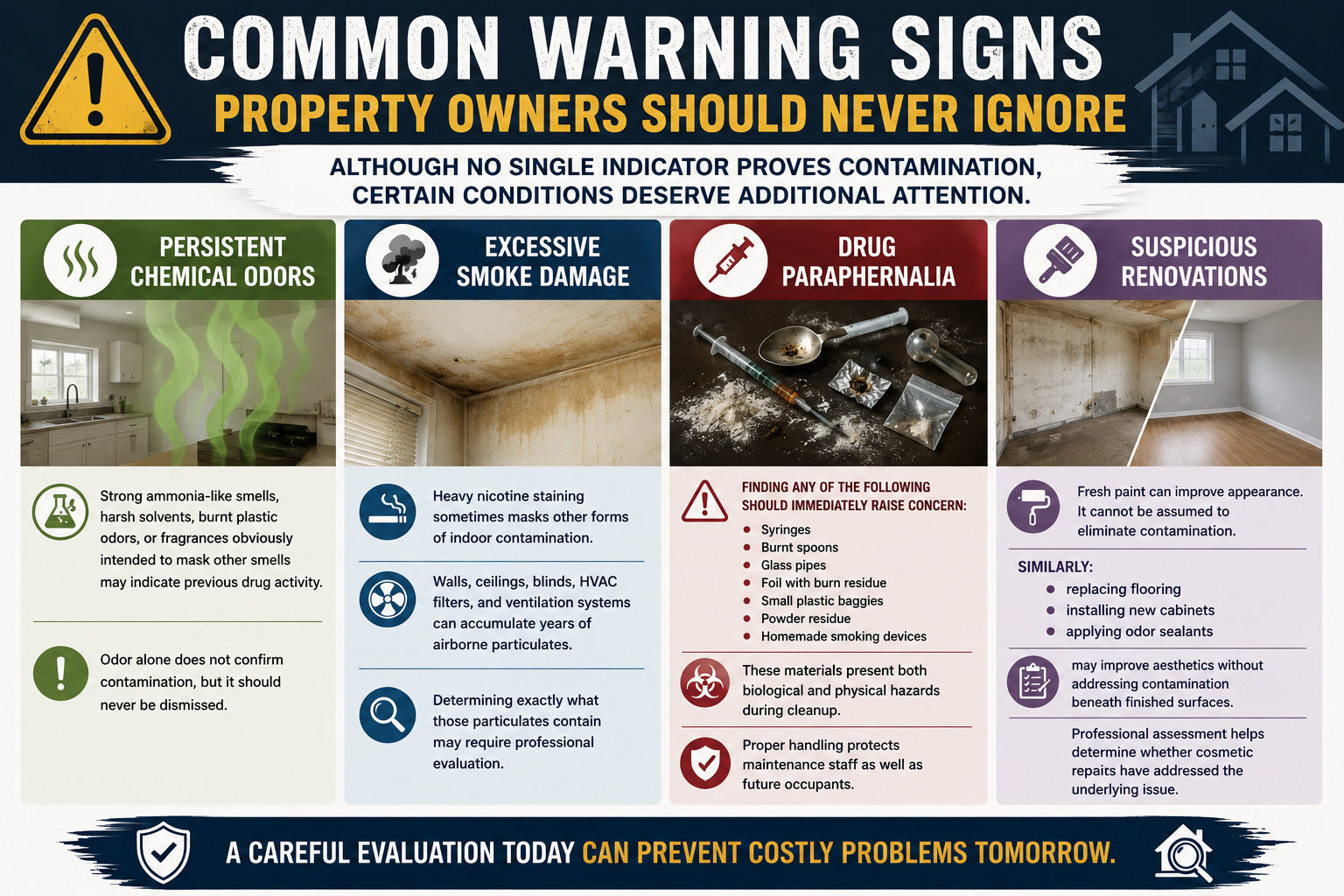
Perhaps there are burn marks on countertops. Maybe the walls have an unusual yellow or gray discoloration. Strong fragrances seem to cover an underlying chemical odor. Air filters appear unusually dirty despite recent replacement. Neighbors quietly mention frequent late-night visitors or suspicious activity during the previous lease.
Individually, none of these observations confirms illegal drug activity. Together, however, they may indicate that the property deserves a closer evaluation before it is marketed again.
The challenge is that contamination often cannot be identified through sight or smell alone.
Drug Use Versus Drug Manufacturing
One of the biggest misconceptions among landlords is believing contamination only occurs when a property was used as a methamphetamine laboratory.
While former meth labs often require extensive remediation because of the chemicals involved in manufacturing, repeated drug use can also introduce contaminants into the indoor environment.
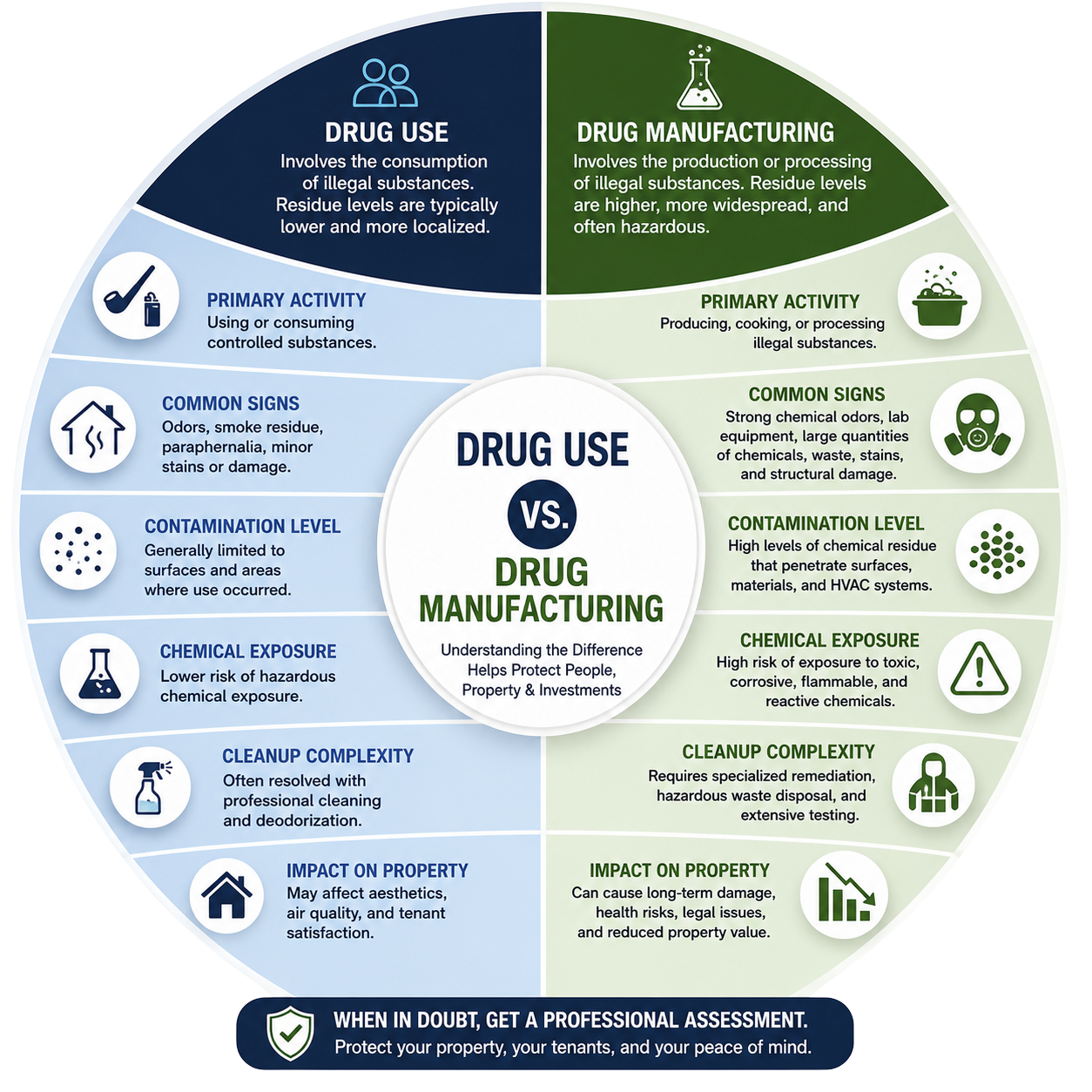
These may include:
- Smoke particulates
- Aerosolized drug residues
- Chemical byproducts
- Bodily fluids
- Syringes
- Drug paraphernalia
- Biological contaminants
- Surface residues
The level of contamination depends on many variables, including:
- Frequency of use
- Type of substance
- Ventilation
- Building materials
- Cleaning history
- Occupancy duration
Every property presents a unique situation.
Also Read 👉🏻What Are the Health Risks of Living in a Meth-Contaminated Home?
Why Invisible Contamination Matters

People naturally associate contamination with something they can see.
Mold grows.
Water stains spread.
Fire damage blackens walls.
Drug contamination is often completely invisible.
Microscopic particles can settle onto:
- Walls
- Ceilings
- Flooring
- Furniture
- Cabinets
- HVAC components
- Air ducts
- Window coverings
- Insulation
- Personal belongings left behind
Without laboratory analysis, determining whether contamination exists—and to what extent—can be difficult.
This is why visual inspections, while important, are only one part of evaluating a property's condition.
Also Read 👉🏻How to Identify and Remediate Former Meth Lab Properties in Colorado
Understanding Health Concerns

The health effects associated with drug-contaminated environments vary considerably.
Factors include:
- Age
- Overall health
- Exposure duration
- Concentration levels
- Type of contaminant
- Existing respiratory conditions
Children are often considered more vulnerable because they:
- spend more time on floors
- place objects in their mouths
- breathe more rapidly relative to body size
- have developing immune and neurological systems
Older adults and individuals with respiratory illnesses may also experience greater sensitivity to indoor contaminants.
It is important to recognize that symptoms alone cannot diagnose environmental contamination. Appropriate environmental testing provides objective information for decision-making.
Also Read 👉🏻How Do Buyers Discover Meth Contamination During Home Inspections?
Why Standard Cleaning May Not Be Enough
Many landlords assume a deep cleaning crew can prepare a property for its next occupants.
Standard turnover cleaning remains extremely important, but it has limitations.
Typical cleaning focuses on removing:
- Dust
- Dirt
- Soap scum
- Grease
- Trash
- Surface debris
Potential contamination associated with illegal drug use may involve microscopic residues that have bonded to porous materials, accumulated inside HVAC systems, or settled into inaccessible areas.
The appropriate response depends entirely on the specific circumstances of the property.
Professional remediation companies begin with assessment—not assumptions.
Rather than immediately recommending extensive work, experienced remediation professionals evaluate available evidence, identify areas of concern, and help property owners understand what additional testing or cleaning may be appropriate.
Also Read 👉🏻How Do You Know If a Cleanup Company Is Actually Qualified?
Real-World Scenario
Imagine purchasing a duplex that appears recently renovated. Fresh flooring has been installed, the walls have been repainted, and the property passes a routine walk-through.
Several weeks later, a contractor removing an HVAC register discovers drug paraphernalia hidden inside the ductwork. Air filters show unusually heavy particulate buildup, and neighbors reveal that emergency responders had visited the property multiple times during the previous tenancy.
Instead of guessing, the owner pauses renovations and consults a professional remediation company. After evaluating the property, targeted testing identifies the areas requiring attention. By addressing the problem before new tenants move in, the owner protects occupant safety, reduces potential liability, and avoids much larger complications down the road.
Understanding Landlord Liability
Owning rental property carries more than financial responsibility—it also involves providing a reasonably safe environment for occupants. While laws vary by jurisdiction, landlords generally have a duty to address known hazards before allowing a new tenant to occupy a property.
If there is credible evidence of illegal drug use or suspected contamination, ignoring the issue can create unnecessary risk. Beyond the potential health implications for future tenants, unresolved contamination may lead to disputes, delays in property sales, insurance complications, or costly repairs if the problem is discovered later.
The goal is not to assume every property is contaminated. Instead, it is to make informed decisions based on observable evidence, professional assessment, and, when appropriate, environmental testing.
Also Read 👉🏻Colorado Law Requirement After a Property Tests Positive for Meth
👮🏻https://law.justia.com/codes/colorado/2018/title-38/real-property/article-35.7/section-38-35.7-103/
When Should Environmental Testing Be Considered?
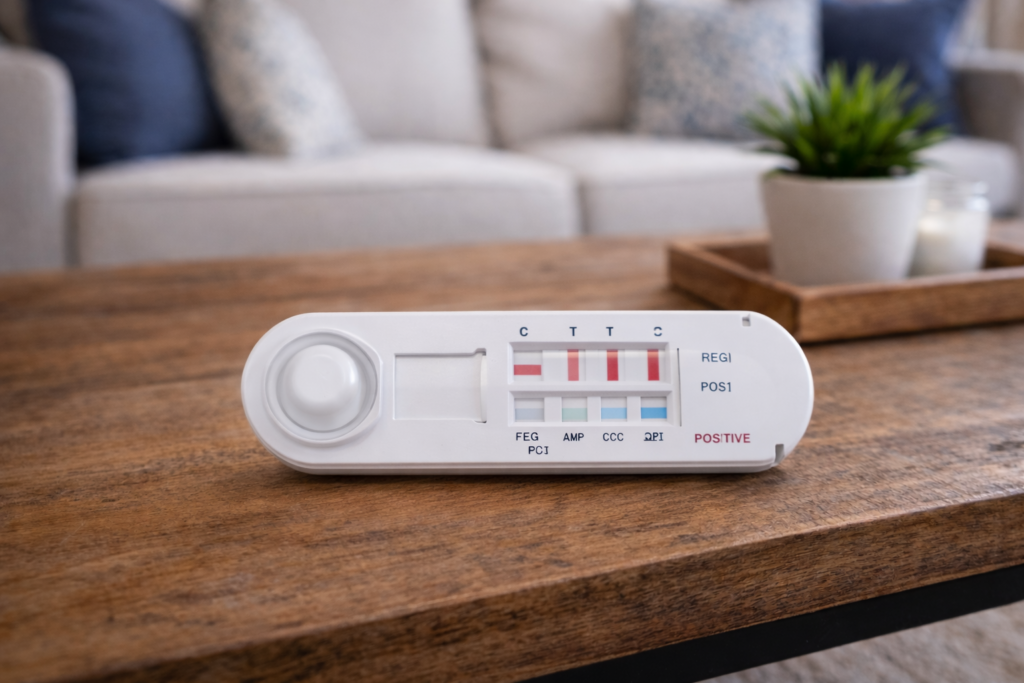 Environmental testing is not necessary after every tenant moves out. However, there are situations where testing may provide valuable information.
Property owners should consider consulting with a qualified professional when they discover:
- Evidence of repeated illegal drug use.
- Drug paraphernalia left behind.
- Reports from neighbors or law enforcement regarding suspected drug activity.
- Persistent chemical odors that cannot be explained.
- Heavy indoor smoke residue.
- Unexplained staining or residue on walls and ceilings.
- Children or medically sensitive individuals will occupy the property.
- A lender, insurer, or buyer requests documentation.
Testing provides objective data. Rather than relying on assumptions or appearances, laboratory analysis can help determine whether contamination is present and whether additional remediation should be considered.
Also Read 👉🏻How Meth Testing and Clearance Affect Real Estate Transactions in Colorado
Why HVAC Systems Deserve Special Attention
One area frequently overlooked during rental turnover is the HVAC system.
When substances are smoked indoors, microscopic particles become airborne before eventually settling throughout the structure. Heating and cooling systems may circulate those particles repeatedly throughout the property.
Potential areas of concern include:
- Air ducts
- Supply registers
- Return vents
- Furnace compartments
- Air filters
- Evaporator coils
Replacing an air filter alone does not necessarily address contamination that may have accumulated deeper within the system.
Professional inspection helps determine whether HVAC cleaning or component replacement should be considered.
Also Read 👉🏻What Role Do Air Scrubbing, VOC Control, and CLO₂ Play in Meth Remediation?
👀IAQ Testing Services
Porous Materials Can Behave Differently Than Hard Surfaces

Not every surface responds to cleaning in the same way.
Hard, non-porous materials such as glass, metal, and certain sealed surfaces may be easier to evaluate and clean.
Porous materials can present additional challenges because contaminants may penetrate beneath the surface.
Examples include:
- Drywall
- Ceiling tiles
- Carpet
- Upholstered furniture
- Insulation
- Unfinished wood
- Acoustic ceiling materials
The extent of contamination determines whether cleaning, encapsulation, or replacement is the most appropriate solution.
Every property requires an individualized assessment rather than a one-size-fits-all approach.
Also Read 👉🏻How Can Hidden Odors Destroy Property Value and Tenant Retention?
Documentation Protects Everyone
One of the most valuable investments a landlord can make during a questionable turnover is thorough documentation.
Good documentation may include:
- Move-out photographs
- Maintenance records
- Cleaning invoices
- Contractor reports
- Environmental testing results
- Laboratory reports
- Remediation documentation
- Clearance documentation when applicable
These records help demonstrate that reasonable steps were taken to evaluate and address potential concerns before new occupants moved in.
Documentation also provides valuable information if questions arise months or years later.
Also Read 👉🏻What Goes Into a Biohazard Cleanup? Colorado Safety Protocols & Certification Requirements
The Value of Professional Remediation
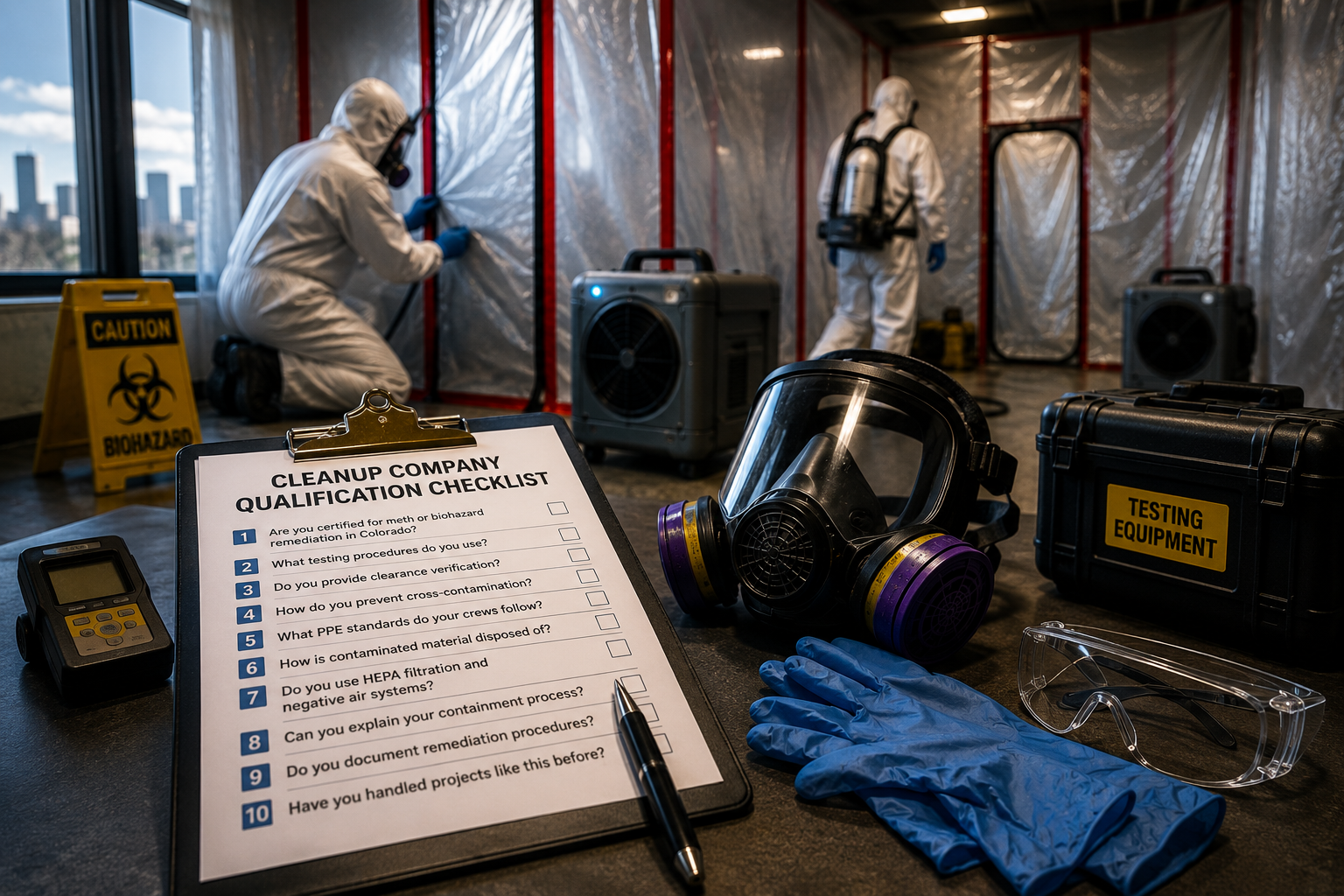
Professional remediation is much more than cleaning.
Experienced remediation specialists understand how contamination behaves inside buildings and follow established procedures designed to evaluate, contain, remove, and document hazards.
Depending on the situation, remediation may involve:
- Detailed property assessment
- Containment procedures
- Removal of contaminated materials
- Specialized cleaning methods
- HVAC evaluation
- Surface decontamination
- Waste disposal
- Verification testing
- Coordination with independent laboratories
The objective is always the same:
Restore the property to a condition that supports safe future occupancy while documenting the work performed.
🚚Services
Insurance Considerations
Insurance coverage for contamination varies significantly between policies.
Some policies exclude contamination associated with illegal activities.
Others may provide limited coverage under certain circumstances.
Because every policy is different, landlords should:
- Review their policy language.
- Notify their carrier promptly when significant contamination is suspected.
- Maintain detailed documentation.
- Keep photographs and reports.
- Avoid discarding evidence before consulting professionals.
Understanding coverage early can prevent unexpected financial surprises later in the remediation process.
Also Read 👉🏻What Do Insurance Companies Look for in Biohazard Remediation Documentation?
Practical Steps for Landlords During Tenant Turnover
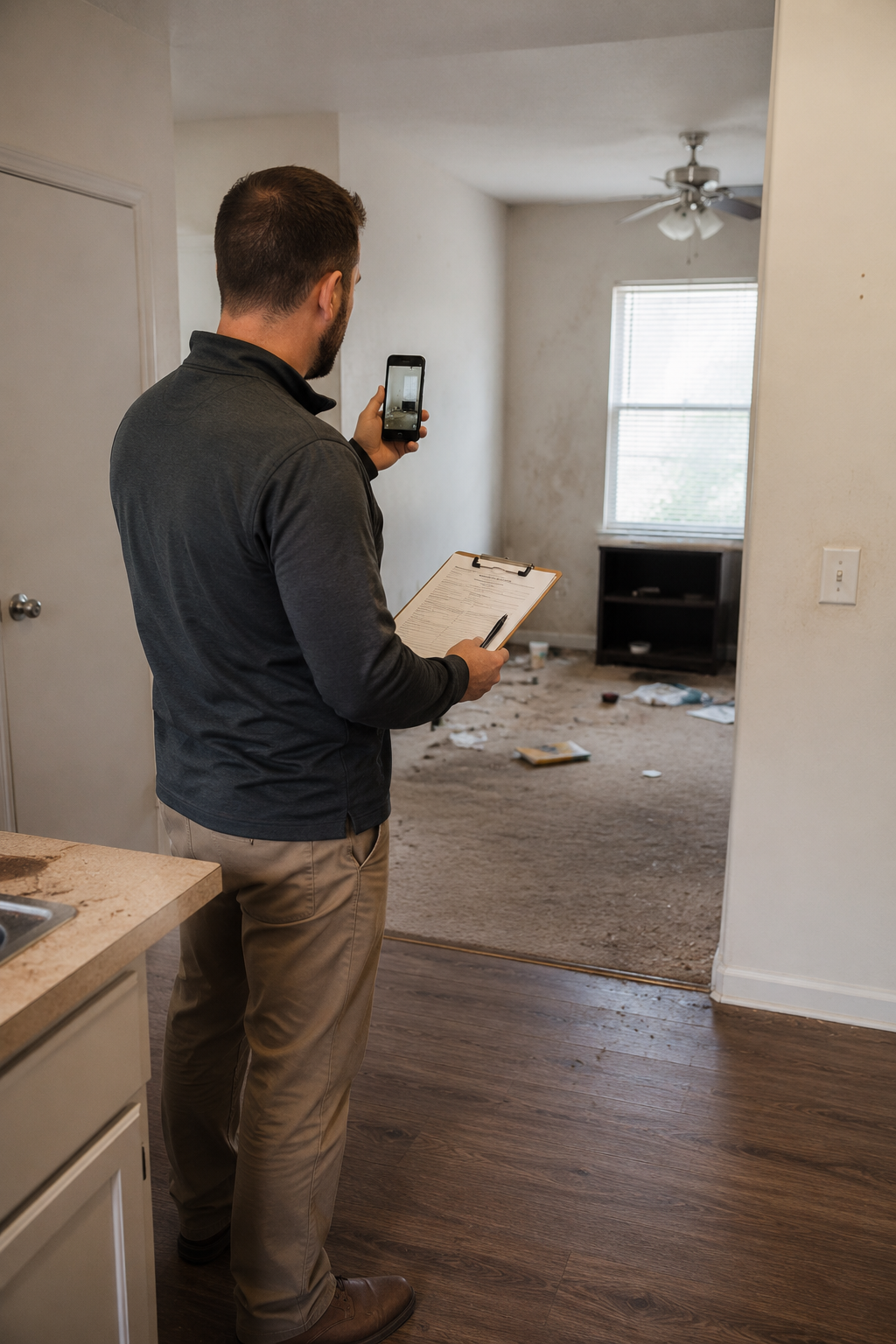
If illegal drug use is suspected, property owners should avoid rushing the turnover process.
A thoughtful approach often saves time and money.
A practical checklist includes:
- Conduct a thorough visual inspection.
- Photograph anything unusual.
- Document odors and visible damage.
- Avoid disturbing suspicious materials unnecessarily.
- Arrange professional evaluation if warranted.
- Complete recommended cleaning or remediation.
- Retain all documentation.
- Confirm the property is ready before advertising for new tenants.
These steps help reduce uncertainty while protecting both landlords and future occupants.
Also Read 👉🏻Indoor Airborne Contaminants: Hidden Risks in Your Home & How to Eliminate Them
Prevention Is Always Easier Than Remediation
Although no screening process is perfect, proactive property management can reduce risk.
Helpful practices include:
- Careful tenant screening.
- Regular property inspections where permitted by law.
- Prompt maintenance responses.
- Good communication with neighbors.
- Documentation throughout the lease.
- Immediate investigation of suspicious complaints.
Early identification often limits both damage and remediation costs.
Also Read 👉🏻How Is Meth Remediation Actually Performed in a Colorado Home?
What To Do Next...
Illegal drug use inside rental properties presents challenges that are often invisible but should never be ignored. While not every property experiencing drug activity requires extensive remediation, every situation deserves thoughtful evaluation based on facts rather than assumptions.
Recognizing warning signs, documenting conditions, understanding when professional testing may be appropriate, and consulting experienced remediation professionals helps landlords make informed decisions that protect their investment and the health of future occupants.
At Denver Decon, we understand that every property is different. Our team works with property owners, real estate professionals, property managers, and environmental testing partners to evaluate contamination concerns and recommend practical, science-based solutions tailored to each situation. Taking the right steps before the next tenant moves in can help reduce liability, preserve property value, and provide greater peace of mind.
📞Contact

🏡Home
Frequently Asked Questions
1. Can illegal drug use contaminate a rental property?
Yes. Repeated drug use may leave behind smoke residues, chemical particulates, biological hazards, or other contaminants depending on the substance involved and how it was used.
2. Does every property where drugs were used require remediation?
No. Every property should be evaluated individually. The extent of contamination varies greatly, and professional assessment can help determine the appropriate course of action.
3. Can fresh paint hide contamination?
Fresh paint may improve appearance, but it should not be assumed to remove or eliminate contamination beneath the surface.
4. Should landlords test every rental property?
Routine testing is generally unnecessary unless there is evidence suggesting contamination or other conditions that warrant additional investigation.
5. Are HVAC systems affected by indoor drug use?
Potentially. Airborne particles may circulate through heating and cooling systems and settle within filters, ducts, and mechanical components.
6. What should I do if I find drug paraphernalia?
Avoid handling hazardous materials unnecessarily. Secure the area and consult appropriate professionals regarding safe removal and evaluation.
7. Can ordinary cleaning remove contamination?
Routine cleaning removes dirt and debris, but some contaminants may require specialized remediation depending on the material and the level of contamination.
8. Why is documentation important?
Photographs, testing reports, invoices, and remediation records help demonstrate that reasonable steps were taken to evaluate and address potential hazards.
9. Can contamination affect property value?
Potentially. Identifying and properly addressing contamination concerns may help preserve marketability and reduce future liability.
10. Who should landlords contact if contamination is suspected?
A qualified remediation company experienced in environmental contamination can help evaluate the situation and coordinate with environmental testing professionals when appropriate.