

Why Does My Basement Smell Worse After It Rains?
Colorado homeowners often notice an unusual pattern.
The basement smells normal most of the year.
Then a summer thunderstorm arrives.
Within a day or two, a musty odor begins spreading through the lower level of the home.
Sometimes the smell remains isolated to the basement.
Other times the entire house begins to smell damp or earthy.
Many homeowners assume water has entered the basement.
While that is sometimes true, musty odors often develop even when no visible flooding is present.
The real issue is moisture.
Even small increases in moisture can reactivate odor sources that have been quietly waiting beneath the surface.
Colorado Storm Season Creates Ideal Conditions for Musty Odors
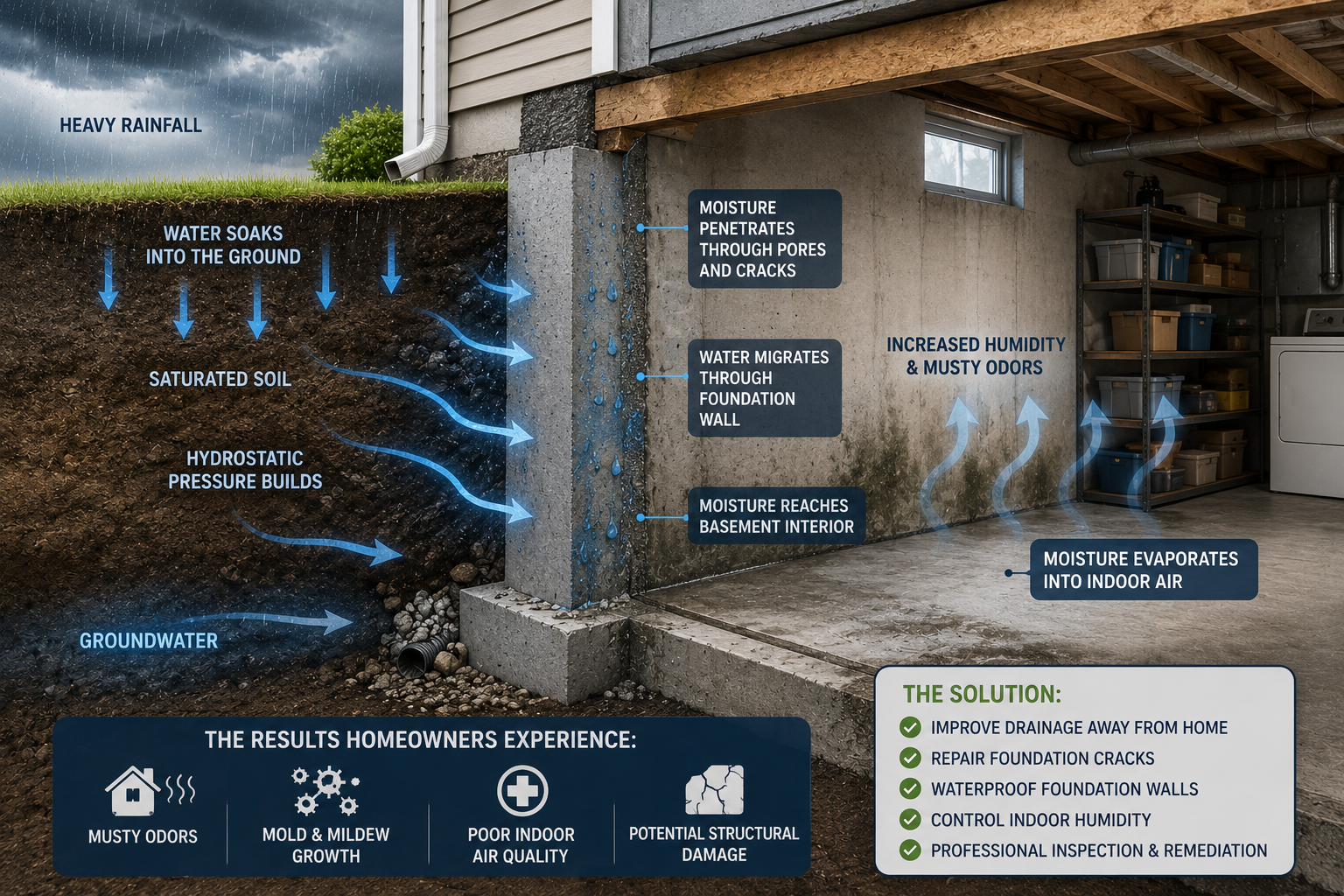
Colorado is not typically viewed as a humid climate.
However, summer storms can dramatically change moisture conditions around a home.
Heavy rainfall can:
- Saturate soil near foundations
- Increase crawlspace humidity
- Raise moisture levels in basement walls
- Activate organic materials
- Increase mold and mildew activity
These changes often occur without obvious water damage.
A basement can appear dry while still producing significant odor problems.
The Hidden Relationship Between Moisture and Odor
Most musty odors originate from biological activity.
When moisture increases, microscopic organisms become more active.
Common odor sources include:
- Mold growth
- Mildew
- Bacteria
- Decaying organic material
- Damp wood
- Wet insulation
- Dust accumulation
As these materials become damp, they release odor compounds into the air.
The result is the classic musty basement smell many homeowners recognize immediately.
Also Read ⛈️Is Mold in Your Kitchen Sink a Hidden Health Risk?
Why Crawlspaces Often Create Whole-House Odor Problems
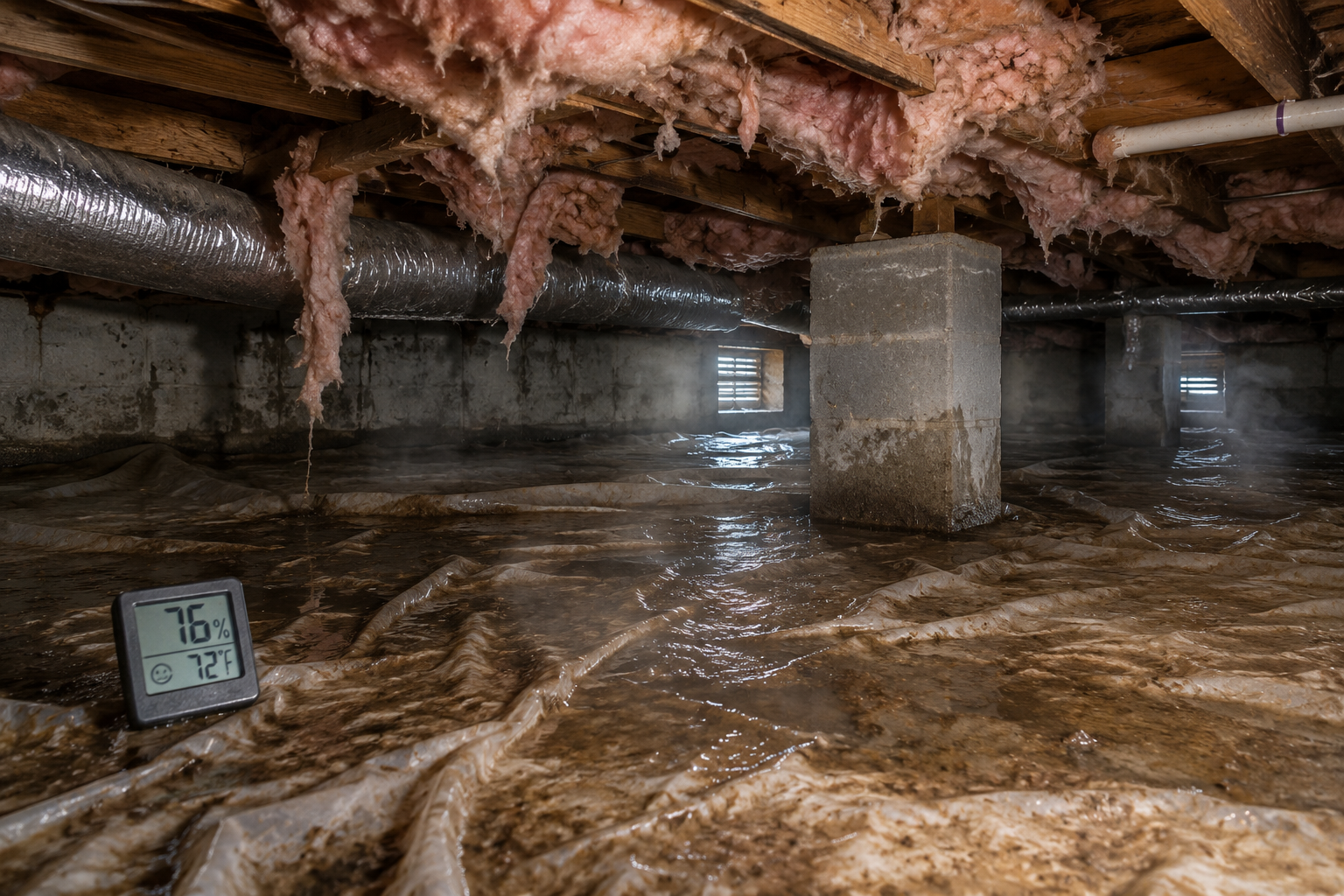
Many homeowners rarely enter their crawlspace.
Unfortunately, crawlspaces frequently become major odor reservoirs.
Common crawlspace odor sources include:
- Excess humidity
- Ground moisture
- Wet insulation
- Rodent contamination
- Organic debris
- Mold growth
- Soil gases
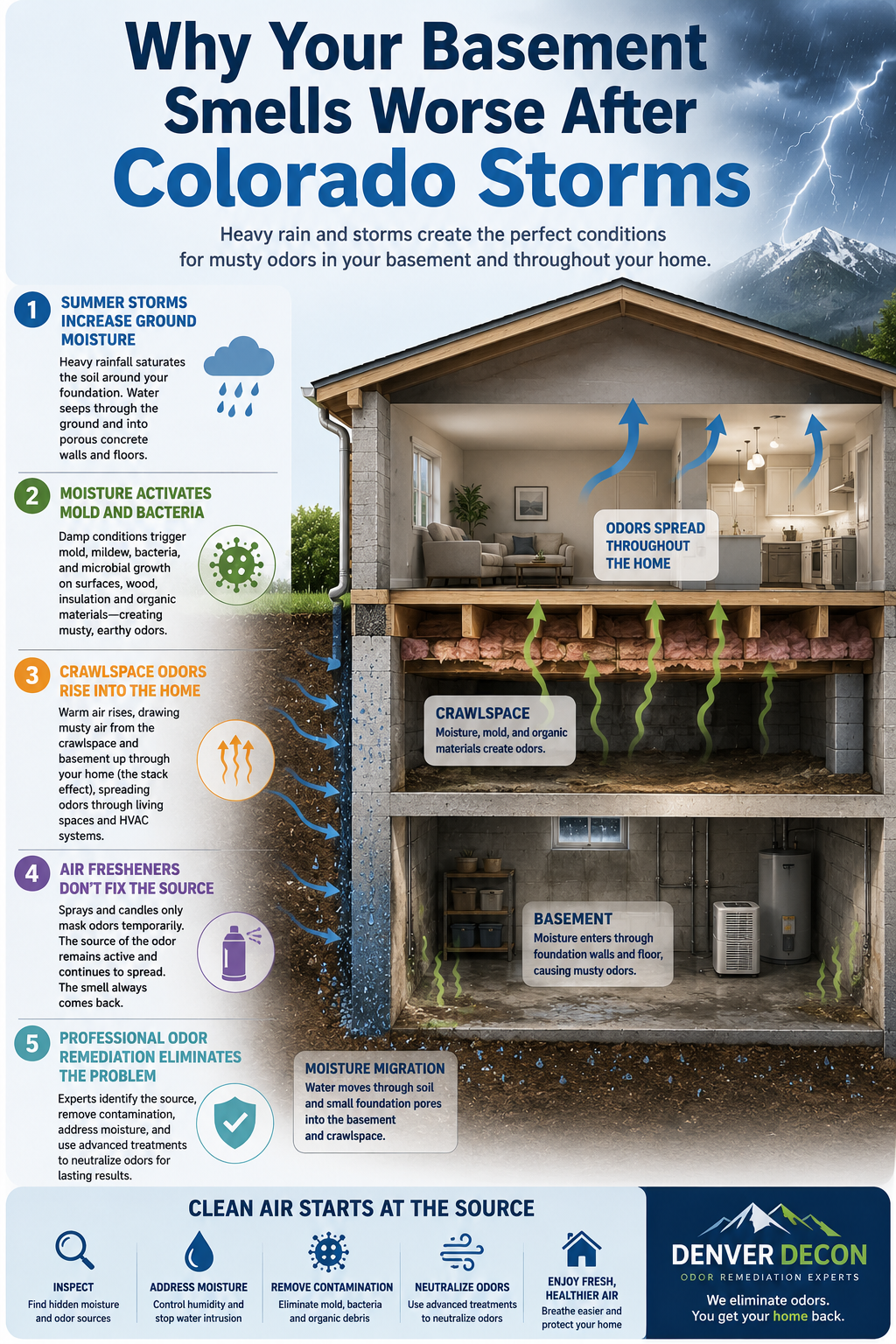
What makes crawlspaces especially problematic is the way air moves through a home.
Many houses naturally pull air upward.
This phenomenon, often called the stack effect, allows crawlspace odors to migrate into:
- Living rooms
- Bedrooms
- Hallways
- HVAC systems
As a result, homeowners may smell odors upstairs without realizing the source is beneath the home.
Colorado Homeowner Scenario
A homeowner in Westminster contacted Denver Decon after noticing a persistent earthy smell every time summer storms passed through the area.
The basement never flooded.
There were no obvious leaks.
Several dehumidifiers had been installed.
Despite these efforts, the odor continued returning.
A detailed inspection revealed elevated moisture levels within portions of the crawlspace insulation and organic debris accumulation beneath the home.
Although moisture levels were relatively minor, they were sufficient to activate microbial activity and generate recurring odors.
Once the contamination source was addressed and professional odor remediation was completed, the musty smell disappeared.
Also Read ⛈️Seasonal Mold & Odor Risks in Colorado: What Should You Watch for in Winter vs. Summer?
Why Air Fresheners Never Solve Musty Basement Odors
One of the most common homeowner responses to basement odors is air fresheners.
Unfortunately, this approach rarely works.
Air fresheners:
- Cover odors temporarily
- Add fragrance to existing odors
- Fail to remove contamination
- Allow moisture problems to continue
The result is often a mixture of fragrance and musty odor rather than true odor elimination.
Successful odor remediation requires locating and treating the source.
Also Read ⛈️Indoor Airborne Contaminants: Hidden Risks in Your Home & How to Eliminate Them
Signs Your Basement or Crawlspace Has an Odor Problem
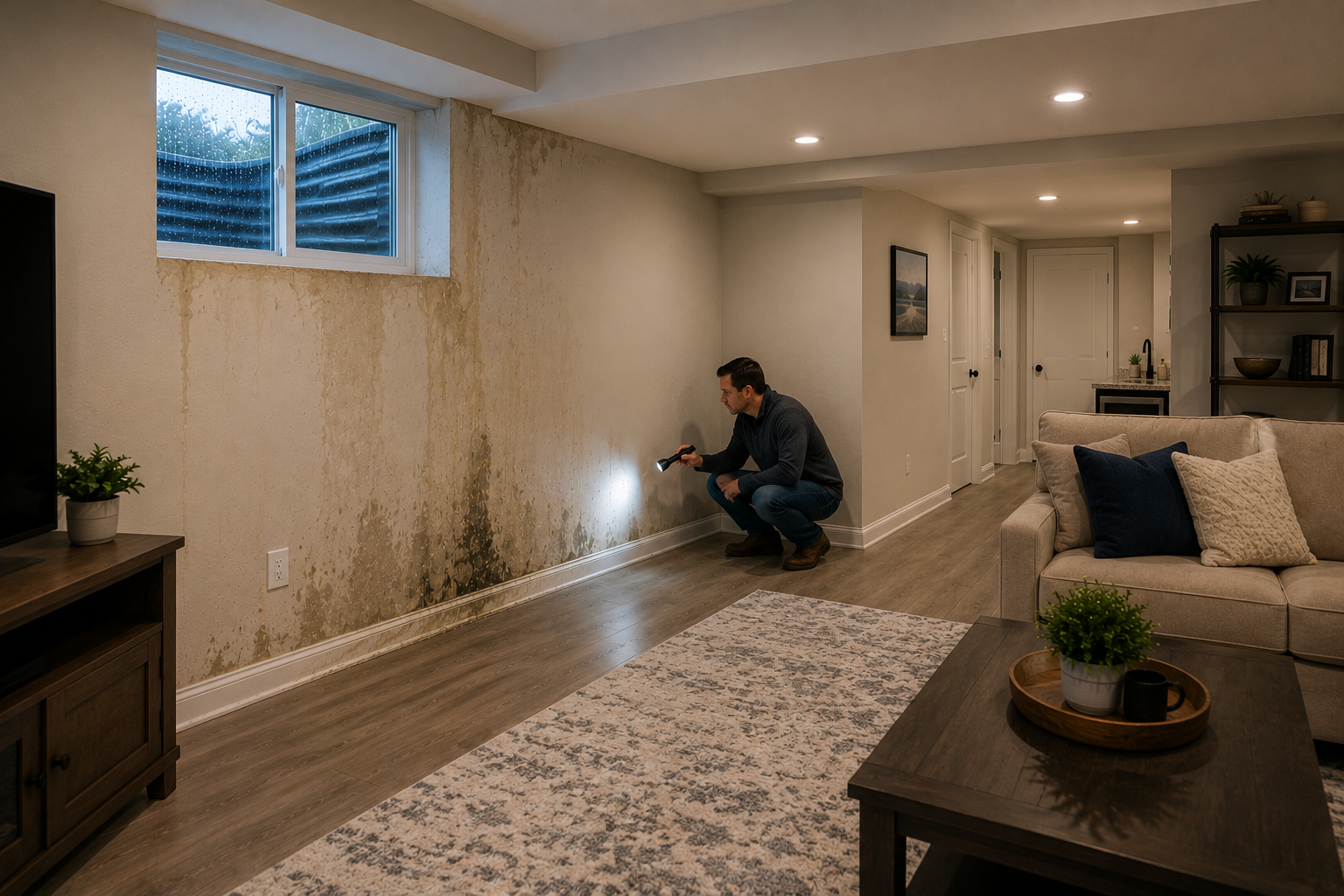
Watch for these common warning signs:
- Earthy smells
- Damp odors
- Stronger odors after storms
- Odors near HVAC vents
- Visible staining
- Condensation issues
- Mold growth
- Increased allergy symptoms
The sooner these warning signs are addressed, the easier the remediation process often becomes.
The Connection Between Indoor Air Quality and Basement Odors
Many homeowners view basement odors as a nuisance.
In reality, they can affect overall indoor air quality.
When odor compounds circulate through a home, they can impact comfort and contribute to concerns regarding:
- Air freshness
- Humidity control
- Occupant comfort
- HVAC performance
- Home sale readiness
Addressing odor sources often improves overall indoor air quality throughout the home.
Also Read ⛈️How to Improve Indoor Air Quality?
Why Professional Odor Remediation Works
Professional odor remediation focuses on identifying the actual source of the smell.
This may involve:
- Moisture investigation
- Crawlspace inspection
- Source identification
- Odor neutralization
- Contamination removal
- Indoor air quality evaluation
Rather than masking odors, remediation targets the conditions creating them.
Also Read ⛈️How Do You Know If a Cleanup Company Is Actually Qualified?
Future-Proofing Your Basement and Crawlspace
Colorado homeowners can reduce future odor issues by:
- Managing drainage around foundations
- Cleaning gutters regularly
- Maintaining downspouts
- Monitoring humidity levels
- Installing vapor barriers when appropriate
- Addressing moisture quickly
- Scheduling professional inspections
Preventing moisture often prevents odors.
Also Read ⛈️Seasonal Mold & Odor Risks in Colorado: What Should You Watch for in Winter vs. Summer?
Conclusion
Musty basement and crawlspace odors rarely appear without a reason.
Colorado's summer storm season can create the perfect conditions for hidden moisture problems, microbial activity, and odor production beneath your home.
If odors become stronger after rain, the problem may not be visible—but it is often identifiable and treatable.
The key is addressing the source before the issue spreads throughout the home.
Give Us A Call
If your basement or crawlspace smells musty after Colorado storms, Denver Decon can help identify and eliminate the source.
Our professional odor remediation services target hidden odor problems at their source, helping homeowners restore cleaner indoor air and greater peace of mind.
Contact Denver Decon today to schedule a professional odor assessment.
Frequently Asked Questions
Why does my basement smell musty after it rains?
Rain can increase moisture levels around your home's foundation, basement walls, and crawlspace. Even if water never enters the basement, elevated moisture can activate mold, mildew, bacteria, and other odor-producing materials.
Can a basement smell musty without visible mold?
Yes. Musty odors can develop long before mold becomes visible. Moisture trapped behind walls, beneath flooring, inside insulation, or within crawlspaces can create odors without obvious signs of mold growth.
Why does my crawlspace smell worse during summer?
Colorado summer storms increase humidity and ground moisture beneath homes. These conditions can activate odor-causing bacteria, mold, damp wood, and organic materials that release musty smells.
Can crawlspace odors travel into the rest of my house?
Yes. Through a process called the stack effect, air naturally moves upward through a home. Odors originating in a crawlspace can migrate into living rooms, bedrooms, hallways, and HVAC systems.
Will a dehumidifier eliminate basement odors?
A dehumidifier may help control moisture levels, but it typically does not remove existing odor contamination. The source of the odor must be identified and treated for long-term odor elimination.
Are musty basement odors harmful?
Musty odors can indicate excess moisture, microbial growth, or other indoor air quality concerns. While the smell itself may not always be dangerous, it often signals underlying issues that should be investigated.
Why do basement odors seem stronger after storms?
Storms increase moisture levels in soil, foundations, crawlspaces, and building materials. This additional moisture can reactivate dormant odor sources and increase the release of odor molecules into indoor air.
Can waterproofing alone eliminate basement odors?
Not always. Waterproofing may help prevent future moisture intrusion, but existing odor contamination may remain in insulation, wood, drywall, carpeting, or other materials unless properly remediated.
How do professionals remove crawlspace odors?
Professional odor remediation identifies the source of contamination, addresses moisture issues, removes odor-causing materials when necessary, and uses specialized treatments to neutralize lingering odors.