
The Air You Breathe Indoors Might Be the Real Problem
Most homeowners focus on what they can see—dust, stains, clutter.
But the real issue?
👉 It’s often in the air.
Studies have shown indoor air can be 2 to 5 times more contaminated than outdoor air, especially in enclosed environments with limited ventilation. That means the place you expect to be safest—your home—can quietly become a source of ongoing exposure.
And unlike surface problems, airborne contaminants don’t stay in one place.
They circulate, settle, and spread.
Why This Is Becoming a Bigger Issue Now
Several factors are driving increased indoor contamination:
- Tighter home construction (less natural airflow)
- Increased use of synthetic materials
- Higher awareness of airborne health risks
- More time spent indoors
The result?
Homes are becoming more energy-efficient—but also more contaminant-trapping environments.
Real-World Scenario (What This Looks Like)
A homeowner notices:
- Lingering odors
- Increased allergy symptoms
- Slight discoloration near vents
They clean, spray, and ventilate—but nothing changes.
What’s actually happening:
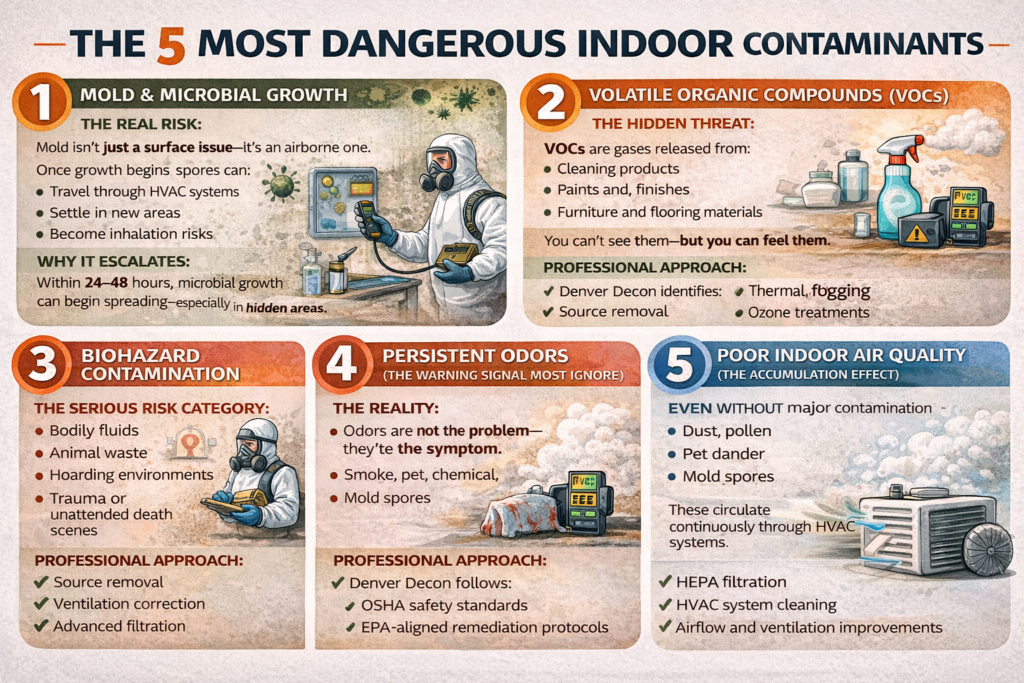
- Mold spores circulate through the HVAC system
- Odor-causing contaminants remain embedded
- Airborne particles continue to spread
Without intervention, this becomes a chronic indoor air quality issue, not a temporary inconvenience.
How to Know If Your Home Needs Professional Decontamination
Watch for these signals:
- Persistent or unexplained odors
- Allergy symptoms worse indoors
- Recent water damage or leaks
- Visible staining or growth
- History of smoking or heavy chemical use
- Pets or animal-related contamination
If multiple signs are present, you’re likely dealing with more than surface-level issues.
Why Professional Remediation Changes the Outcome
Here’s the difference most homeowners underestimate:
Cleaning:
- Removes visible contamination
- Temporary improvement
Remediation:
- Identifies root cause
- Eliminates contamination safely
- Prevents recurrence
- Protects indoor air quality
That’s the gap DenverDecon fills.
Why Homeowners Choose DenverDecon
- Locally owned and operated
- 24/7 emergency response
- Licensed, bonded, and insured
- OSHA & EPA-compliant procedures
- Discreet, professional service
This isn’t just about cleaning—it’s about restoring safety and confidence in your space.
Conclusion: The Air You Ignore Can Cost You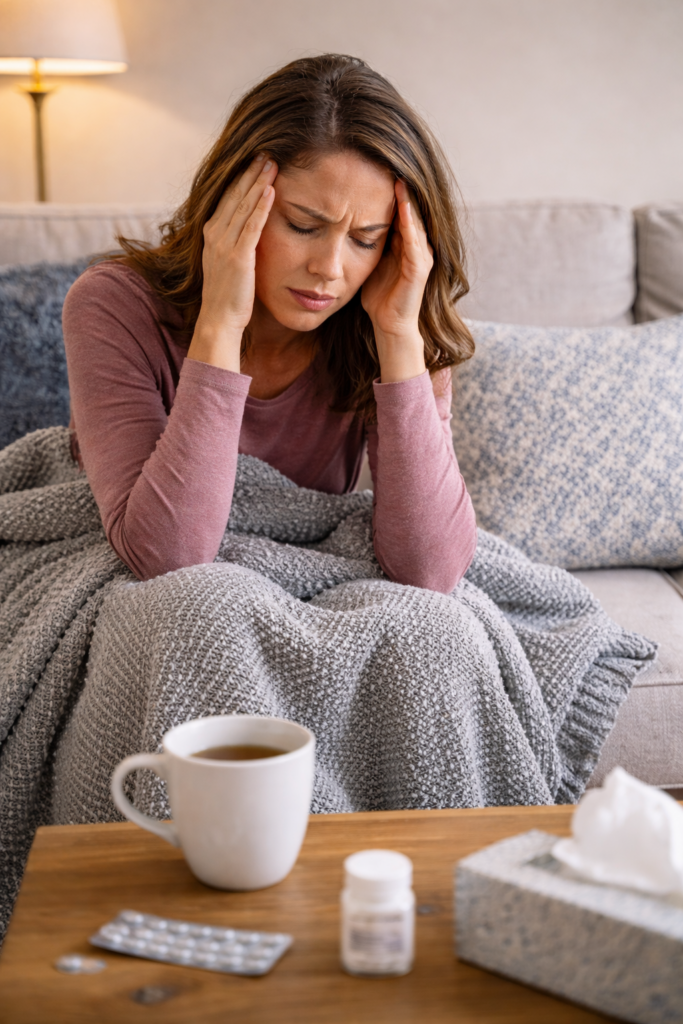
Indoor contamination doesn’t always announce itself loudly.
It builds quietly:
- In the air
- In materials
- In systems you don’t see
And the longer it’s ignored, the more complex—and costly—it becomes.
📞 Call to Action:
Let’s Clear the Air—Contact DenverDecon Today
Whether you're dealing with mold, odors, poor air quality, or biohazard conditions, DenverDecon provides fast, professional solutions backed by industry standards.
👉 Call now or request a consultation online.
Your home should feel safe—and your air should support that.
FAQs
1. What are indoor airborne contaminants?
Particles or gases in indoor air such as mold spores, VOCs, dust, and biohazards that affect air quality.
2. Is indoor air really worse than outdoor air?
Yes, it can be significantly more contaminated due to trapped pollutants and limited airflow.
3. What are the symptoms of poor indoor air quality?
Allergies, headaches, fatigue, respiratory irritation, and persistent odors.
4. How do I know if my home has air quality issues?
Signs include odors, visible mold, worsening allergies, or recent water damage.
5. Can odors indicate contamination?
Yes, odors often signal deeper underlying contamination issues.
6. What does professional air remediation include?
Inspection, containment, removal, filtration, and moisture correction.
7. Are VOCs dangerous in homes?
Yes, prolonged exposure can cause respiratory and neurological symptoms.
8. Can HVAC systems spread contaminants?
Yes, they can circulate particles throughout the entire home.
9. When should I call a professional?
When symptoms persist, contamination returns, or multiple warning signs appear.
10. Is professional remediation worth it?
Yes, it prevents escalation, protects health, and restores safe living conditions.