

The Problem Most Homeowners Underestimate
Mold in your kitchen sink isn’t just a cosmetic issue—it’s often an early warning sign of a deeper contamination problem.
What looks like harmless buildup around your drain or faucet can actually be a mix of mold spores, bacteria, grease, and organic debris. In remediation terms, this is a microbial growth environment, not just “dirt.”
And here’s the reality most people miss:
👉 If mold is visible in your sink, there’s a strong chance it’s already spread beyond it.
Why This Matters More Than You Think (Right Now)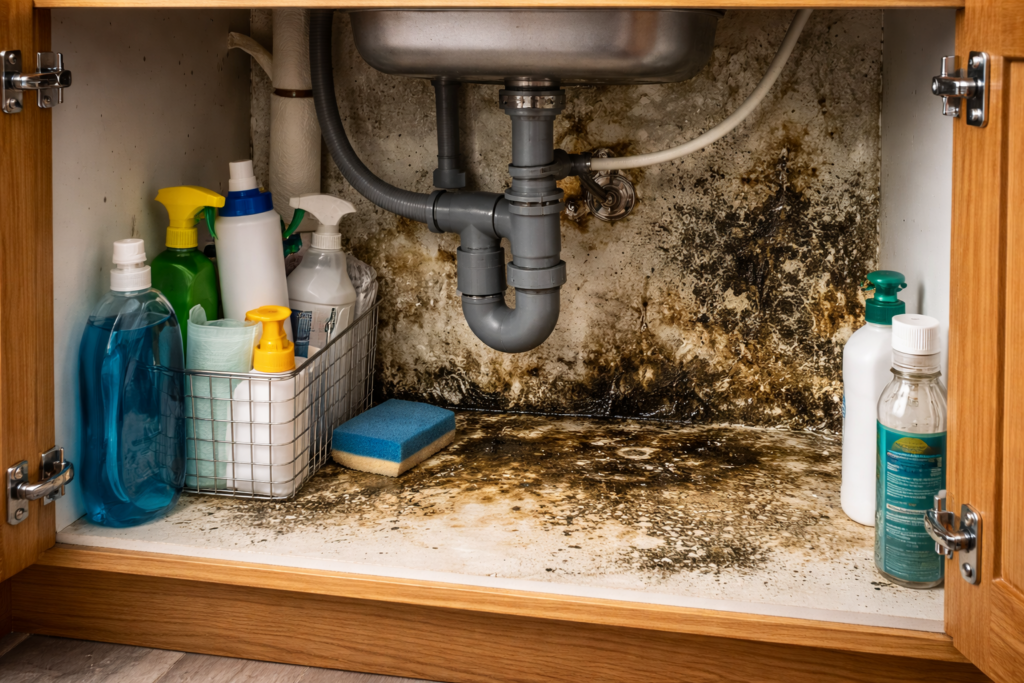
Kitchen environments create a perfect storm for microbial growth:
- Constant moisture
- Organic food particles
- Warm temperatures
- Limited airflow in hidden areas
This isn’t just about cleanliness—it’s about indoor air quality and exposure risk.
Over the last several years, increased awareness around indoor environmental health has changed how professionals approach even “small” mold issues. What used to be ignored is now recognized as a potential contamination source that can escalate quickly.
Also Read 📖Hidden Mold in Colorado Homes: Why “Clean” Doesn’t Always Mean Safe
What You’re Actually Seeing: It’s Not Just Mold
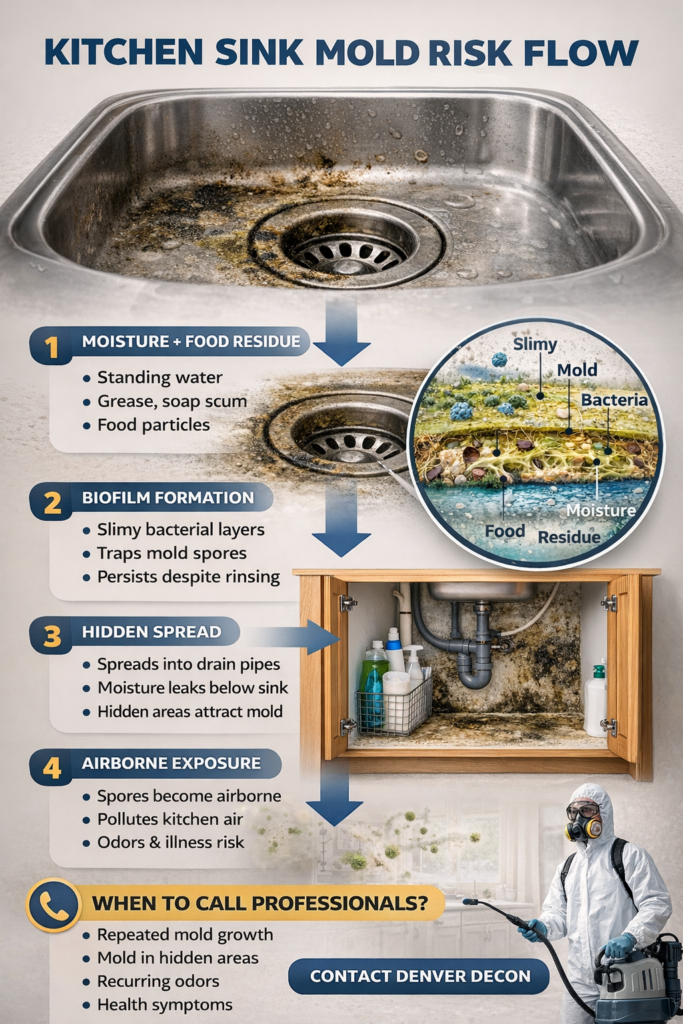
That slimy buildup in your sink—often called “mold sling”—isn’t pure mold.
It’s a biofilm, which includes:
- Mold spores
- Bacteria colonies
- Grease and organic waste
- Moisture-trapped debris
This combination creates a self-sustaining growth system that:
- Protects microorganisms from basic cleaning
- Allows rapid regrowth
- Produces persistent odors
That’s why simple rinsing or surface cleaning rarely solves the issue long-term.
Real-World Scenario (What This Turns Into)
A homeowner notices a musty smell near the sink. They clean it repeatedly, but it keeps coming back.
What’s actually happening behind the scenes:
- Mold spreads into drain lines and pipe interiors
- Moisture migrates into cabinet materials under the sink
- Air circulation distributes spores into the kitchen
Within days to weeks, this can evolve from a small nuisance into:
- Widespread odor contamination
- Airborne irritants
- Hidden structural moisture issues
Health Risks: Not Always Obvious at First
Mold exposure doesn’t always hit like a truck—it often builds gradually.
Common early symptoms:
- Sneezing or sinus irritation
- Itchy eyes or throat
- Persistent mild cough
Escalation can include:
- Respiratory stress
- Aggravation of asthma
- Skin irritation
And certain mold types—especially darker, toxigenic varieties—can introduce more serious long-term exposure concerns if left untreated.
Also Read 📖Seasonal Mold & Odor Risks in Colorado: What Should You Watch for in Winter vs. Summer?
Why DIY Cleaning Often Fails
Let’s be blunt—most DIY approaches only treat the surface.
Even thorough cleaning methods:
- Baking soda
- Vinegar
- Peroxide
…can remove visible growth, but they do not address:
- Embedded contamination in porous materials
- Biofilm-protected bacteria
- Mold growth inside plumbing systems
That’s why the issue keeps coming back—and often worse.
When This Becomes a Professional-Level Problem
Here’s where the line gets drawn.
You should strongly consider professional inspection if:
- The smell returns after cleaning
- Mold appears dark, thick, or widespread
- Growth is inside drains or under fixtures
- You notice recurring health symptoms
- The issue keeps cycling every few weeks
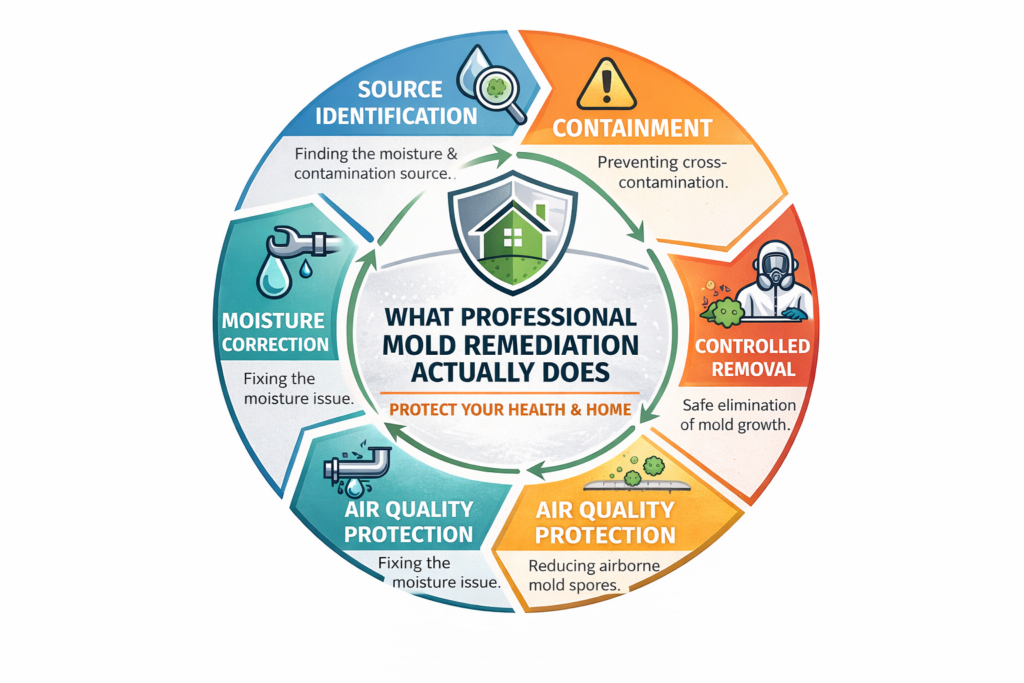
At that point, it’s no longer a cleaning issue—it’s a remediation issue.
The Bigger Picture: It’s About Risk, Not Just Cleaning
Mold in a kitchen sink is often treated as a minor inconvenience.
But in reality, it’s a signal:
- Of moisture imbalance
- Of microbial growth
- Of potential indoor air quality decline
Ignoring it doesn’t just keep your sink dirty—it increases the risk of:
- Spread
- Cost escalation
- Health exposure
Conclusion: When to Act
If you can clean it once and it stays gone—you’re fine.
If it keeps coming back, smells worse, or spreads…
👉 That’s your signal.
At that point, the smartest move isn’t more scrubbing—it’s getting a professional evaluation before the problem escalates further.
FAQs
1. Is mold in a kitchen sink dangerous?
Yes, it can impact indoor air quality and trigger allergic or respiratory reactions over time.
2. Why does mold keep coming back in my sink?
Because the root cause—moisture and hidden contamination—has not been resolved.
3. Can mold grow inside sink pipes?
Yes, drain lines are one of the most common hidden growth areas.
4. What does black mold in a sink look like?
It often appears as dark, slimy, or thick patches around drains or seals.
5. Does vinegar kill sink mold permanently?
No, it may remove surface growth but does not prevent regrowth if conditions remain.
6. When should I call a mold professional?
When mold returns repeatedly, spreads, or causes noticeable odor or symptoms.
7. Can mold affect indoor air quality?
Yes, spores can become airborne and circulate through your home.
8. Is sink mold a sign of bigger problems?
Often yes—it can indicate moisture or contamination in hidden areas.
9. How fast can mold spread in a kitchen?
Within 24–48 hours under the right moisture conditions.
10. Is professional mold removal worth it?
Yes, when the issue is recurring or widespread, it prevents larger health and property risks.