

A sewage backup is one of the most destructive events that can happen inside a home. While most homeowners immediately worry about the unpleasant smell, contaminated water, and damaged belongings, another serious problem often develops quietly in the background—mold.
The short answer is yes. Mold can begin growing surprisingly quickly after a sewage backup if the affected materials are not thoroughly cleaned, dried, and disinfected. Because sewage water contains both moisture and organic material, it creates one of the most favorable environments possible for mold growth.
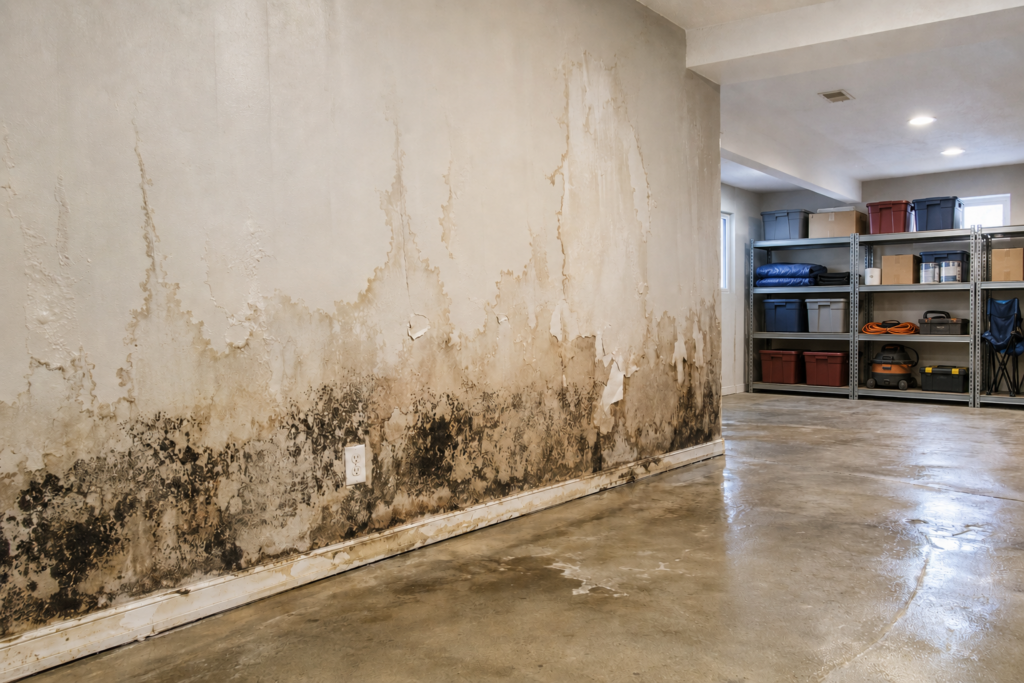
The danger isn't simply that mold appears after the water is gone. In many cases, mold begins growing inside walls, beneath flooring, under cabinets, inside insulation, and other hidden building cavities long before homeowners realize there's a problem.
Understanding why this happens requires looking beyond the visible mess and examining the science of how sewage contamination affects a building.
The Short Answer
Yes, mold can absolutely grow after a sewage backup—and often much faster than homeowners expect.
Unlike clean water from a broken supply line, sewage is classified as Category 3 Water, commonly referred to as black water. It contains:
~Human waste
~Harmful bacteria
~Viruses
~Parasites
~Organic debris
~Food particles
~Grease
~Nutrients that microorganisms thrive on
Once this contaminated water saturates drywall, wood, carpet, insulation, furniture, or subfloors, it creates ideal conditions for microbial growth.
Even after standing water is removed, moisture frequently remains trapped inside porous materials. If drying is incomplete, mold spores that naturally exist in the environment can begin colonizing these damp surfaces.
Also Read 👉🏻What Are the Health Risks of Living in a Meth-Contaminated Home?
Understanding What Happens During a Sewage Backup
Many people imagine sewage as simply "dirty water."
In reality, it's far more complex.
Think of sewage as an ecosystem.
It contains millions—sometimes billions—of living microorganisms along with dissolved organic matter that has been continuously decomposing.
When that water enters your home, it doesn't merely wet the floor.
It introduces contamination into nearly every porous material it contacts.
These contaminants include:
~Proteins
~Carbohydrates
~Oils
~Fats
~Cellulose
~Organic sludge
~Bacteria colonies
~Nutrient-rich biofilms
To mold, this environment is almost ideal.
First Principles: Why Mold Grows So Well After Sewage Damage
To understand why sewage backups are so dangerous, we need to understand what mold actually needs to survive.
Mold only requires five basic ingredients:
~Moisture
~Oxygen
~Moderate temperatures
~Organic food source
~Time
Nearly every home already supplies four of these.
The missing ingredient is usually persistent moisture.
A sewage backup suddenly provides:
~abundant water
~additional nutrients
~elevated humidity
~contamination that slows drying
~saturated building materials
Instead of simply wet drywall, you now have drywall soaked with nutrient-rich organic matter.
That dramatically increases the likelihood of mold colonization.
Also Read 👉🏻How Do Buyers Discover Meth Contamination During Home Inspections?
How Quickly Can Mold Begin Growing?
One of the biggest misconceptions is that homeowners have several days—or even weeks—to deal with sewage damage.
Unfortunately, mold doesn't operate on our schedules.
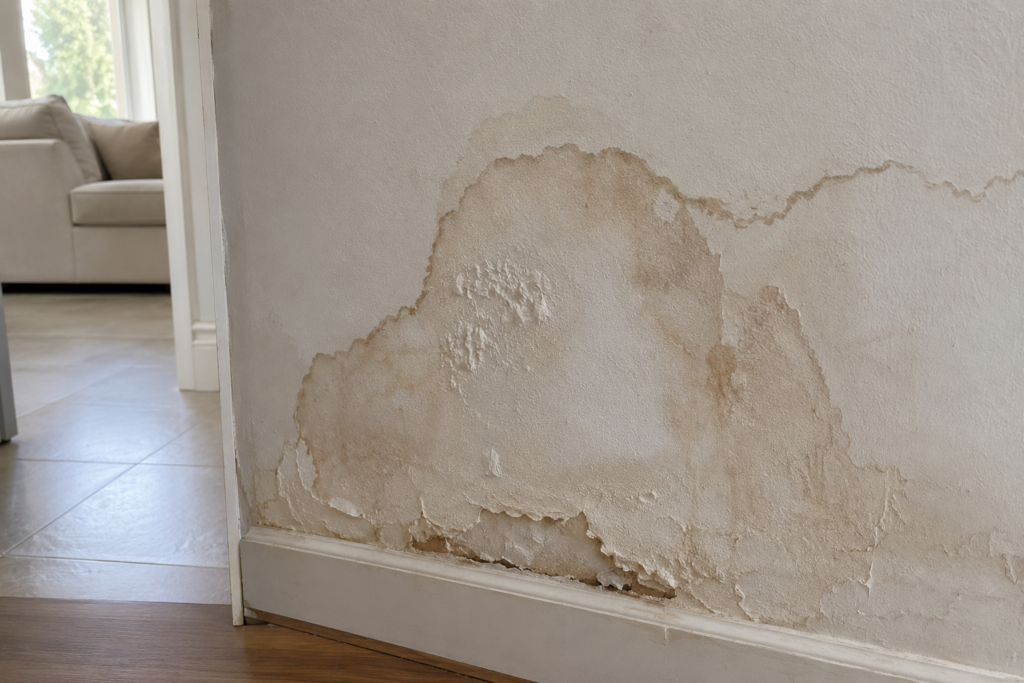
Under favorable conditions, mold spores may begin germinating within approximately 24 to 48 hours.
This doesn't mean you'll immediately see black mold covering your walls.
Instead, the early stages often occur invisibly.
Microscopic fungal colonies begin forming beneath carpet backing, inside drywall paper, behind baseboards, or inside insulation.
Weeks later, homeowners finally notice:
~a musty odor
~discoloration
~warped flooring
~bubbling paint
~staining
~persistent humidity
By that point, mold may already be well established.
Also Read 👉🏻How Do You Know If a Cleanup Company Is Actually Qualified?
Why Sewage Makes Mold Worse Than Clean Water
Imagine spilling a glass of clean water onto a wooden table.
Now imagine pouring a bowl of warm soup onto the same table.
Which one leaves behind more residue?
Which one feeds bacteria?
Which one is harder to clean?
Sewage behaves much more like the soup.
It doesn't simply evaporate.
It leaves behind organic residue that remains inside porous materials even after the visible water disappears.
This residue becomes food for:
~bacteria
~mold
~mildew
~yeast
~other microorganisms
That is one reason professional sewage cleanup differs dramatically from ordinary water extraction.
Also Read 👉🏻What Role Do Air Scrubbing, VOC Control, and CLO₂ Play in Meth Remediation?
Hidden Places Mold Commonly Develops
Many homeowners only inspect the obvious areas. Unfortunately, mold rarely stays where it's easy to find. After a sewage backup, professionals commonly discover hidden growth inside:
Drywall Cavities
Drywall acts like a sponge.
Moisture can travel upward through the paper facing and gypsum core, even above the visible water line.
Baseboards
Baseboards often trap moisture behind them.
The wall cavity may remain damp long after the surface appears dry.
Insulation
Fiberglass insulation loses its effectiveness when saturated.
It can retain moisture against framing lumber for extended periods.
Subfloors
Hardwood flooring may appear dry while the plywood beneath remains wet.
Subfloors often support mold growth long before flooring materials show visible damage.
Cabinets
Kitchen and bathroom cabinets frequently conceal moisture beneath toe kicks and behind back panels.
These enclosed spaces dry slowly.
Crawl Spaces
If sewage reaches a crawl space, contaminated moisture can remain for weeks.
Because airflow is limited, crawl spaces often become ideal mold environments.
Why Simply Drying the Area Isn't Enough
A common mistake is assuming that once the water is gone, the danger is over.
With clean water, rapid drying may sometimes prevent mold.
With sewage, drying alone is rarely sufficient.
Why?
Because contamination remains.
Organic residue continues feeding microorganisms even after surfaces feel dry.
That's why professional restoration focuses on three separate goals:
1. Removing contaminated materials
2. Thorough cleaning and disinfection
3. Complete structural drying
Skipping any one of these increases the likelihood of future microbial growth.
Common Homeowner Mistakes After a Sewage Backup
Many secondary mold problems occur not because of the sewage itself—but because homeowners unintentionally make the situation worse.
Common mistakes include:
~Waiting several days before beginning cleanup
~Using household fans that spread contaminants
~Painting over stains
~Leaving wet drywall in place
~Saving contaminated carpet padding
~Assuming bleach solves the problem
~Ignoring hidden moisture beneath flooring
~Failing to remove contaminated insulation
Each delay gives mold more time to establish itself.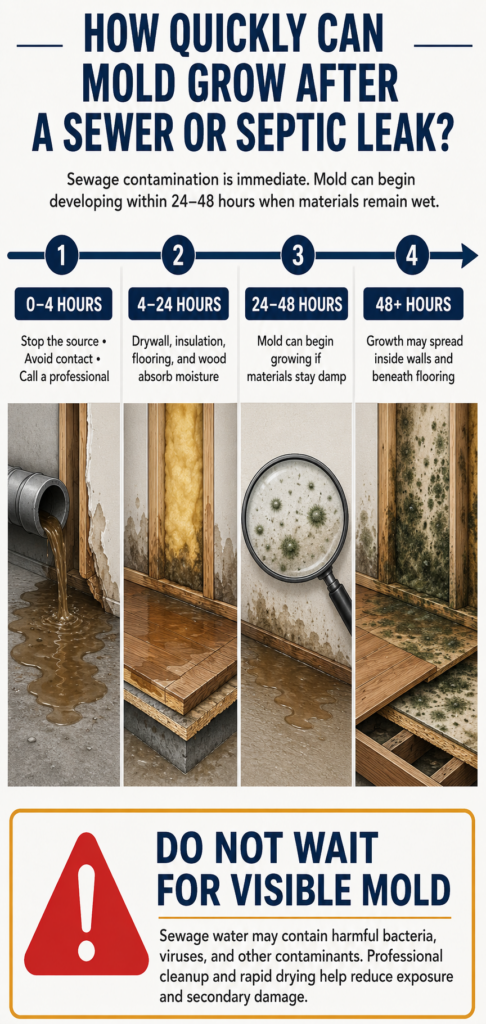
Myth vs. Fact
Myth:
"If I don't see mold, I don't have mold."
Fact:
Visible mold often represents only a small portion of the total contamination. Hidden wall cavities and flooring systems frequently support growth long before anything appears on the surface.
Myth:
"Bleach kills all mold after sewage damage."
Fact:
Bleach has significant limitations on porous materials and does not replace proper removal of sewage-contaminated building materials when necessary.
Myth:
"Once everything feels dry, the danger is over."
Fact:
Moisture trapped inside structural assemblies may remain for days or weeks without specialized drying equipment and moisture mapping.
Also Read 👉🏻How Can Hidden Odors Destroy Property Value and Tenant Retention?
Why Some Materials Cannot Be Saved After a Sewage Backup
One of the hardest decisions homeowners face after a sewage backup is determining what can be cleaned and what must be discarded.
The answer isn't simply based on whether something looks dirty.
It's based on whether the material can be safely decontaminated.
Category 3 water contains disease-causing organisms and organic contaminants that penetrate porous materials. Once those contaminants are absorbed, complete cleaning may no longer be possible.
Materials that often require removal include:
~Carpet padding
~Wet insulation
~Particleboard cabinetry
~Ceiling tiles
~Upholstered furniture
~Pressed wood furniture
~Paper products
~Cardboard storage boxes
~Mattresses
~Soft furnishings that cannot be professionally decontaminated
Even if these materials dry, contamination may remain trapped inside.
Also Read 👉🏻What Goes Into a Biohazard Cleanup? Colorado Safety Protocols & Certification Requirements
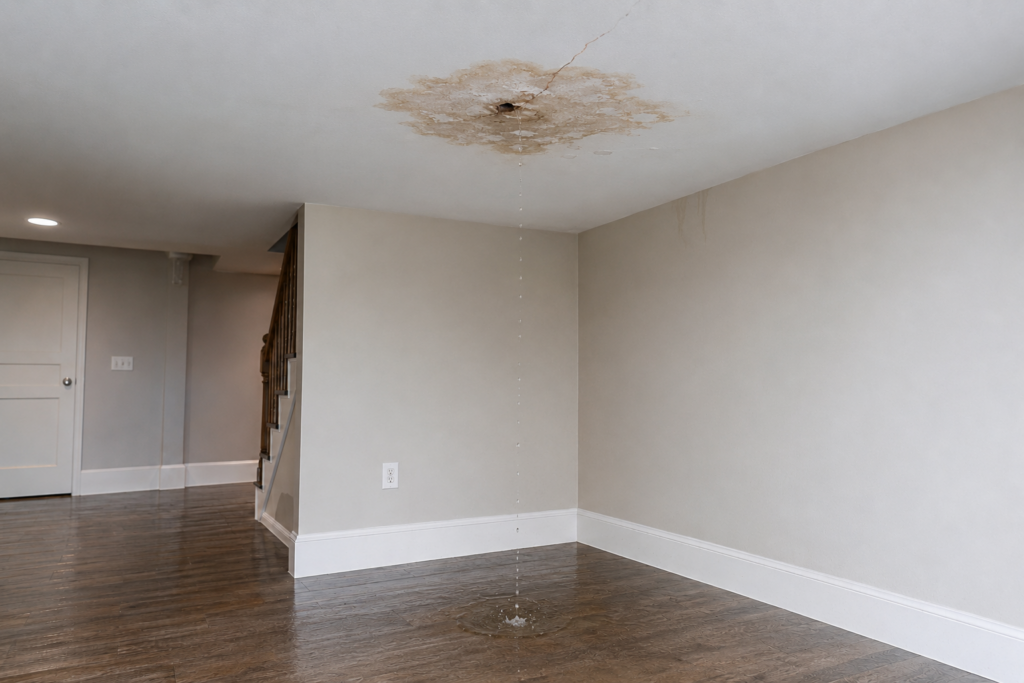
The Professional Sewage Cleanup Process
Professional sewage remediation is far more involved than extracting standing water.
Each step is designed to reduce contamination while minimizing the chances of future mold growth.
1.Safety Assessment
Professionals first evaluate:
~Electrical hazards
~Structural stability
~Extent of contamination
~Source of the sewage
~Personal protective equipment requirements
Because sewage contains biological hazards, technicians wear specialized PPE including gloves, respirators, eye protection, and protective suits.
2.Containment
Containment prevents contaminants from spreading into unaffected areas.
This often includes:
~Plastic containment walls
~Negative air pressure
~HEPA-filtered air scrubbers
~Controlled traffic patterns
Without containment, mold spores and sewage contaminants can spread throughout the home during cleanup.
3.Removal of Contaminated Materials
Not every building material can be salvaged.
Technicians evaluate:
~Moisture content
~Material type
~Level of contamination
~Structural integrity
Materials that cannot be safely restored are removed under controlled conditions.
4.Cleaning and Disinfection
After damaged materials are removed, every remaining surface is thoroughly cleaned.
This process often includes:
~HEPA vacuuming
~Detergent cleaning
~Specialized antimicrobial products
~Biofilm removal
~Detail cleaning of structural components
The goal is to remove contamination—not simply mask odors.
5.Structural Drying
This is one of the most important phases.
Professionals use commercial equipment such as:
~High-capacity dehumidifiers
~Air movers
~Injectidry systems (when appropriate)
~Desiccant drying equipment
~HEPA filtration
Drying continues until moisture readings confirm that affected materials have returned to acceptable levels.
6.Moisture Verification
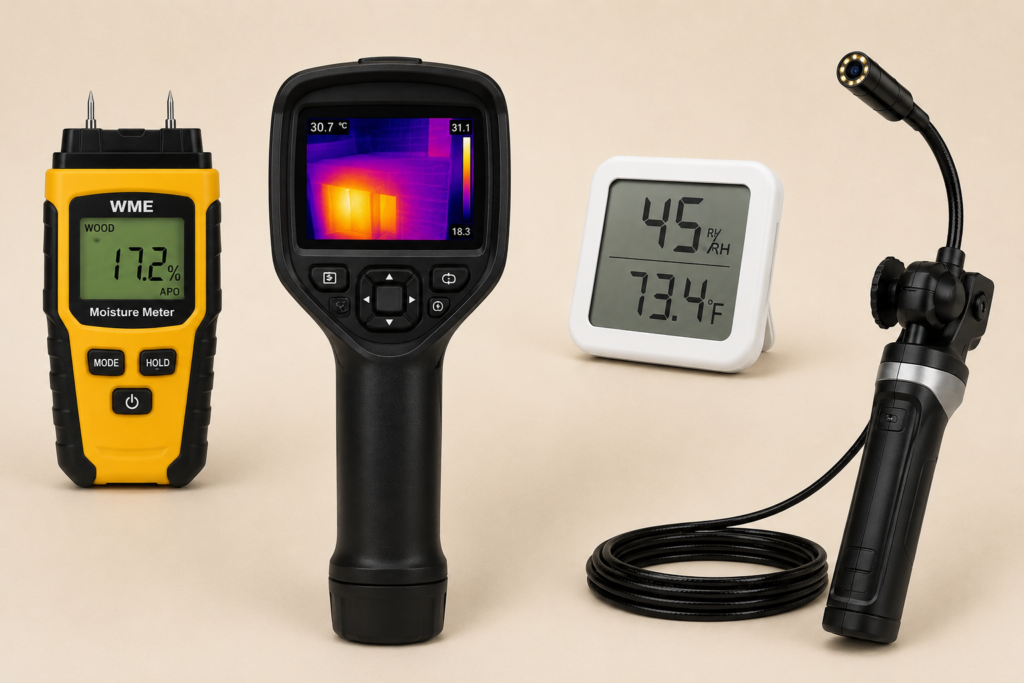
Experienced restoration professionals don't rely on touch alone. They use instruments including:
Moisture Meters - Measure moisture inside wood, drywall, and flooring.
Thermal Imaging Cameras - Help identify temperature differences that may indicate hidden moisture.
Hygrometers - Measure humidity conditions inside the structure.
Borescopes - Allow inspection inside wall cavities without unnecessary demolition.
These tools help verify that hidden moisture has been addressed before reconstruction begins.
Why Odors Often Remain After Cleanup
Many homeowners are surprised when a home continues to smell unpleasant even after obvious sewage has been removed.
That's because odors can remain trapped inside:
~Subfloors
~Framing lumber
~HVAC systems
~Wall cavities
~Insulation
~Concrete
~Porous building materials
Professional odor removal focuses on eliminating the source of the odor rather than simply covering it up.
Depending on the situation, professionals may use:
~HEPA air filtration
~Hydroxyl generators
~Specialized odor-neutralizing treatments
~Thermal fogging (where appropriate)
~Deep cleaning of HVAC systems if contamination has spread
~Does Homeowners Insurance Cover Mold After a Sewage Backup?
Insurance coverage varies significantly by policy. Some policies may cover mold if it results directly from a covered sewage backup or sudden accidental water event.
Others may exclude:
~Long-term neglect
~Maintenance issues
~Repeated water intrusion
~Certain sewer backup scenarios without additional endorsements
Because every policy is different, homeowners should:
~Document damage immediately
~Photograph affected areas
~Contact their insurance company promptly
~Work with qualified restoration professionals who can document moisture conditions and cleanup procedures.
Also Read 👉🏻What Do Insurance Companies Look for in Biohazard Remediation Documentation?
Colorado's Climate and Mold Risk
Many homeowners assume Colorado's relatively dry climate eliminates mold concerns. Not necessarily. While Colorado generally has lower outdoor humidity than many parts of the country, indoor conditions after a sewage backup are very different.
Inside the affected area:
~Relative humidity rises dramatically.
~Building materials become saturated.
~Air circulation is often reduced.
~Moisture becomes trapped behind finished surfaces.
Localized moisture—not regional climate—is what drives mold growth after a sewage event.
In fact, homes along Colorado's Front Range, including Denver and surrounding communities, frequently experience mold growth following sewage backups because the moisture is concentrated inside the structure.
How to Reduce the Risk of Mold After a Sewage Backup
If a sewage backup occurs, acting quickly can significantly reduce additional damage.
Important steps include:
~Stop using affected plumbing fixtures if the backup is ongoing.
~Avoid contact with contaminated water.
~Keep children and pets away from the area.
~Turn off HVAC equipment serving the affected space if contamination may spread through the system.
~Document damage with photographs.
~Contact your insurance carrier.
~Call a qualified sewage cleanup professional as soon as possible.
Time matters.
The longer contaminated moisture remains inside building materials, the greater the chance mold will develop.
Also Read 👉🏻Indoor Airborne Contaminants: Hidden Risks in Your Home & How to Eliminate Them
Original Industry Insight
Many homeowners think the sewage itself is the biggest problem.
In reality, the combination of sewage contamination and delayed drying is often what creates the largest restoration project.
The sewage event may last only a few hours.
Hidden moisture can remain for weeks.
That's why successful restoration isn't measured by how clean the floor looks—it's measured by whether hidden moisture has been completely eliminated.
Professionals don't just restore what you can see.
They restore what you can't.
Also Read 👉🏻How Is Meth Remediation Actually Performed in a Colorado Home?
What To Do Next. . .
A sewage backup is one of the most serious emergencies a homeowner can experience because it combines water damage, biological contamination, and the potential for rapid mold growth. Even after the standing water is removed, hidden moisture inside walls, flooring, insulation, and structural materials can continue creating ideal conditions for mold if the home is not properly cleaned, disinfected, and dried.
The good news is that mold is not an unavoidable outcome. Fast action, proper containment, professional decontamination, and verified structural drying can dramatically reduce the risk of long-term damage. Addressing the problem thoroughly the first time is almost always less costly than dealing with hidden mold weeks or months later.
If your home has experienced a sewage backup, don't rely on appearance alone. What you can't see is often more important than what you can. A professional inspection using moisture meters, thermal imaging, and other specialized tools can identify hidden moisture before it becomes a much larger—and more expensive—problem.
Denver Decon provides professional sewage cleanup, biohazard remediation, odor removal, and mold remediation services throughout the Denver metropolitan area. If you suspect contamination or hidden moisture after a sewage backup, prompt evaluation can help protect your home, your indoor air quality, and your family's health.
Frequently Asked Questions
1. Can mold really start growing within 24 hours after a sewage backup?
Mold spores can begin germinating within approximately 24 to 48 hours when moisture, oxygen, and organic materials are present. Sewage water creates ideal conditions for this process.
2. Is sewage water considered mold-contaminated?
Not necessarily, but sewage water contains nutrients and microorganisms that significantly increase the likelihood of mold growth if affected materials remain wet.
3. Can I clean sewage damage myself?
Small, localized incidents may sometimes be addressed safely, but Category 3 water presents significant health risks. Larger sewage backups should be handled by trained professionals using appropriate protective equipment and decontamination procedures.
4. Should drywall always be replaced after sewage damage?
Not always. The decision depends on the extent of contamination, how long materials remained wet, and whether they can be safely restored. A professional assessment is the best way to determine whether removal is necessary.
5. Does bleach prevent mold after a sewage backup?
Bleach has limited effectiveness on many porous building materials and should not be relied upon as the primary method of mold prevention after sewage contamination.
6. How do professionals know if hidden moisture remains?
Restoration professionals use moisture meters, thermal imaging cameras, hygrometers, and other diagnostic equipment to verify that structural materials have dried to acceptable levels.
7. Can mold grow underneath flooring after a sewage backup?
Yes. Moisture can become trapped beneath hardwood, laminate, vinyl, tile underlayment, and carpet, allowing mold to develop even when the floor surface appears dry.
8. Will the sewage odor disappear after cleanup?
Proper cleaning and decontamination should remove the source of the odor. If odors persist, additional odor removal techniques or hidden contamination may need to be addressed.
9. Does homeowners insurance pay for mold after a sewage backup?
Coverage depends on the specific insurance policy, the cause of the sewage backup, and any applicable endorsements. Contact your insurance provider for details about your policy.
10. When should I call a professional after a sewage backup?
Immediately. The sooner contaminated materials are removed, cleaned, disinfected, and dried, the better the chances of preventing mold growth and minimizing long-term damage.