
Can Rodent Droppings Make You Sick? Safe Cleanup After an Infestation
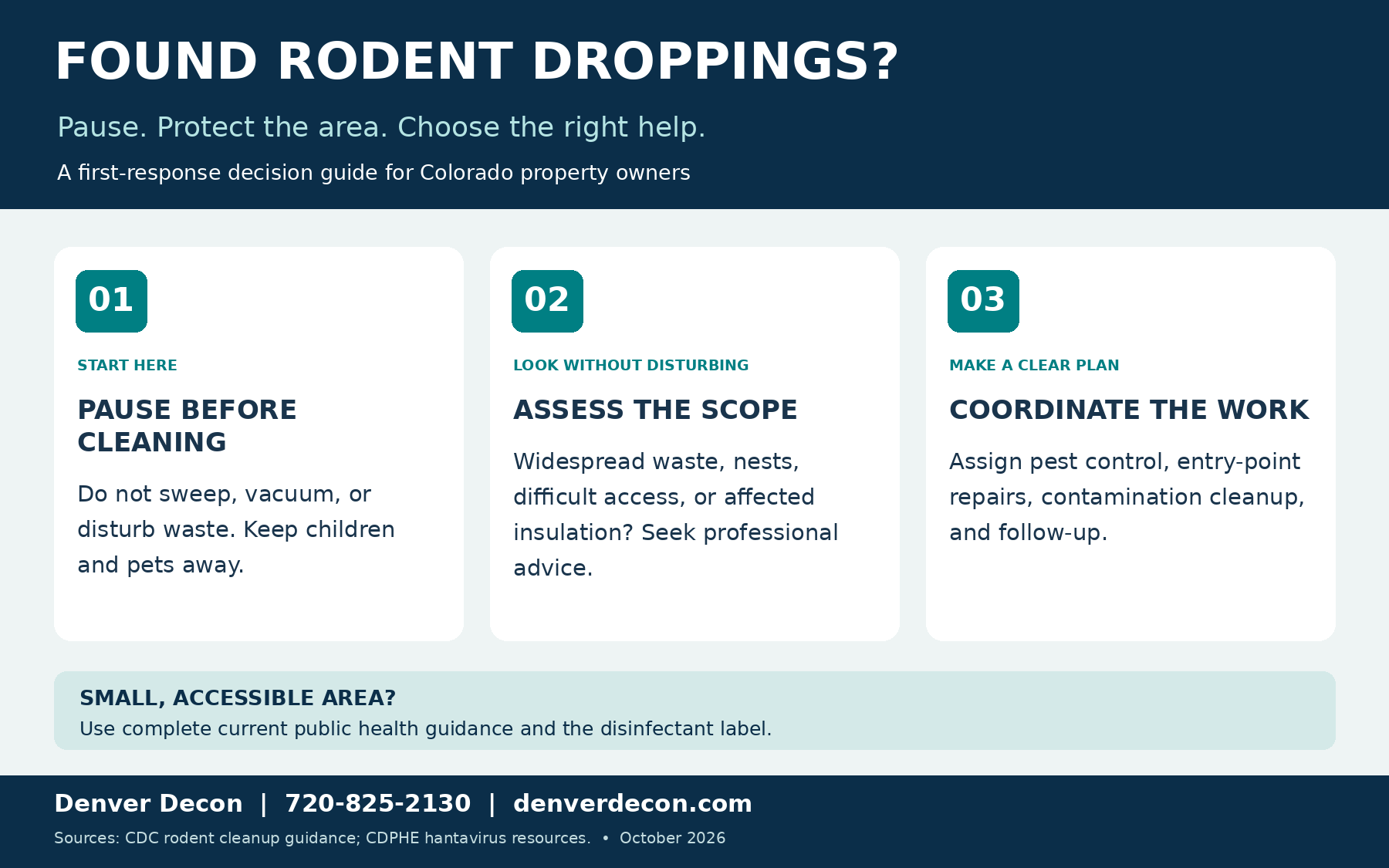
Quick answer: Yes. Rodents can carry infections, and their urine, droppings, saliva, and nesting materials can create exposure risks. Finding droppings does not mean you will become ill, but it does mean cleanup deserves care. Avoid disturbing the waste, keep people and pets away, and evaluate the extent of the problem before choosing a cleanup method. CDC: Controlling Wild Rodent Infestations
You pull a storage bin away from the garage wall and notice small dark pellets along the baseboard. Perhaps you find them beneath a kitchen sink, beside a furnace, or inside a rental property's storage closet. The first question is usually whether mice are still there. The second is whether you can clean everything up yourself.
Those questions require different answers. Pest control addresses the rodents and their access to the building. Contamination cleanup addresses the material they leave behind. A property may need both, and the order and coordination of that work matter.
For homeowners, landlords, and property managers in the Denver area, a useful response starts with the actual conditions: where the evidence is located, how much material is present, which surfaces are affected, and whether cleanup can be completed without spreading contamination.
This guide explains the health concern, the first decisions to make, the difference between limited cleanup and a larger remediation project, and the questions to ask before hiring help.
Why Rodent Droppings Deserve Careful Attention
Rodent contamination is more than an appearance problem. Some infections associated with rodents can spread through contaminated air, food, or direct contact. You cannot determine whether a rodent carries an infection simply by looking at it. CDC: Rodent-Associated Disease Risks
The practical response is to limit exposure rather than attempt to identify a disease from a photograph. Avoid touching waste or handling nearby belongings until you understand the situation. Do not invite multiple people into the space to inspect the same discovery.
A few pellets on an accessible hard surface present a different cleanup project from extensive contamination in insulation or a confined crawlspace. Neither should be judged solely by how unpleasant it looks. Access, material condition, and the ability to work without disturbing waste all influence the decision.
Denver Decon's article What Are Biohazards? Understand the Risks Around You provides background on biological contamination and why the response should match the material involved.
A calm assessment is more useful than either dismissing the discovery or assuming the entire building is contaminated. Start with what you can observe safely and leave unknown areas undisturbed.
What Colorado Property Owners Should Know About Hantavirus
Hantavirus is one reason rodent cleanup guidance receives particular attention in Colorado. The Colorado Department of Public Health and Environment maintains a hantavirus information and prevention resource, including links to cleanup and workplace guidance.
According to CDC, the deer mouse is the most common source of the hantavirus that causes hantavirus pulmonary syndrome in the United States. Exposure can involve infected rodents or their urine, droppings, and saliva. The illness can be serious, but the discovery of mouse droppings alone does not establish an infection or identify the species responsible. CDC: About Hantavirus
Do not handle a mouse, pick apart a nest, or collect droppings to try to prove what is present. Share observations with an appropriate professional instead. A cleanup contractor evaluates property conditions; a healthcare professional evaluates a person's health.
Colorado's hantavirus disease guidance is a public health reference. It should not be treated as a universal contractor licensing rule or a required clearance test for every home with mouse activity.
What Should You Do When You First Find Droppings?
Pause the activity that led to the discovery. If you were unpacking boxes, moving furniture, or preparing to sweep, stop and keep the surrounding items in place.
Limit access to the immediate area. Keep children and pets away, tell other household members or staff what you found, and avoid using the space as a shortcut. In a rental or workplace, notify the person responsible for maintenance so another worker does not begin routine cleaning without knowing about the concern.
From a clean position, record the location and take photographs if that can be done without moving contaminated materials. A useful note might read: “Droppings visible along the back wall of the garage, beneath the shelving, and on two cardboard boxes.” That is more helpful than a general report that the property is dirty.
Do not carry affected boxes into a bedroom or common hallway to make inspection easier. Do not send someone into an attic simply to get a closer picture. Share the information already available and ask what additional assessment is appropriate.
For buildings and outbuildings, CDC recommends opening doors and windows for 30 minutes before cleanup and leaving during that period. Only do so where access is safe; a sealed attic or confined crawlspace needs a different assessment. CDC: How to Clean Up After Rodents
Why Sweeping and Vacuuming Are the Wrong First Steps
CDC advises against sweeping or vacuuming rodent urine, droppings, or nesting materials because disturbance can put contaminated particles into the air. CDC: Rodent Cleanup Guidance
That instruction changes the normal housekeeping response. Leave the broom, household vacuum, and shop vacuum out of the initial cleanup. Avoid using compressed air or a blower to clear a corner. A fast way to remove visible debris may create a more complicated cleanup problem.
If someone already disturbed the material, stop the activity and explain what happened when requesting advice. Include where the equipment was used and whether it was moved elsewhere afterward. Avoid opening or emptying a vacuum indoors to investigate the contents.
For employers and property managers, communicate this before dispatching a general maintenance worker. “Please assess the rodent contamination before cleaning” gives a clearer instruction than “Please sweep the storage room.”
The aim is to preserve control of the situation. Completing an assessment before equipment is selected can prevent work from having to be stopped, reassigned, or repeated.
When Is a Small Cleanup Different From a Heavy Infestation?
Public health agencies distinguish limited rodent contamination from heavy infestations. CDC calls for additional precautions in heavily infested buildings, and National Park Service guidance similarly separates light cleanup from work requiring more extensive protection. CDC: Heavy Infestation Precautions | National Park Service: Hantavirus Cleanup Guidance
There is no reliable homeowner shortcut based on counting a few pellets in one photograph. Consider the full setting. Can you see the boundaries? Is access straightforward? Are there nests, multiple affected rooms, or contamination in materials that cannot simply be wiped clean?
Pause for professional assessment when the affected area is extensive, the building has been vacant, the scope is uncertain, or access requires entering a confined or difficult space. Evidence involving ventilation equipment or large areas of insulation also deserves specialized attention.
Ask the assessor to explain the basis for the proposed scope. A useful explanation identifies the areas observed, the materials involved, and the areas that remain inaccessible. It should also explain what discovery would require a change in the plan.
A reasonable assessment does not need to make an absolute health claim. It needs to establish what work can be performed safely, who is qualified to perform it, and what remains unknown.
What Does Safer Cleanup of a Limited Area Involve?
For limited contamination that can be safely managed, follow the complete current public health instructions rather than improvising from a short checklist. CDC describes wearing rubber or plastic gloves, wetting waste with an appropriate disinfectant, allowing the specified soaking time, wiping it up, cleaning affected hard surfaces, and washing hands after glove removal. Its guidance includes a five-minute soak or the product-label instructions. CDC: Complete Rodent Cleanup Instructions
The product label is part of the method. EPA explains that disinfectants must be suitable for the intended surface and used according to their directions, including keeping the surface wet for the required contact time. EPA: Safe and Effective Disinfectant Use
Check the plan before starting: Is the contamination truly limited? Are the surfaces compatible with the product? Can you complete the work without moving contaminated items through clean areas? Is there a clear method for managing used supplies?
If the answer changes once work begins, stop and reassess. Discovering more material behind a cabinet is a reason to revise the approach, rather than extend a small cleanup method into an unknown space.
For a related explanation of why chemical choice is only one part of remediation, read Why Blood Cleanup Requires More Than Household Disinfectant. Blood and rodent waste are different hazards, but both require attention to the whole cleanup process.
Why Material Type Changes the Cleanup Plan
A shelf, a fabric cushion, a cardboard box, and attic insulation are different materials. A proposal should identify what is affected and explain the intended treatment or removal decision for each category.
National Park Service guidance describes different approaches for hard surfaces, upholstery, and heavily contaminated belongings. This supports a material-specific assessment rather than applying one spray treatment to everything. National Park Service: Light Infestation Cleanup Guidance
For homeowners, the useful question is: “What makes this item suitable for cleaning?” Ask the same question about a proposed disposal decision. Sentimental value matters, but it does not determine whether a cleaning method is technically appropriate.
Before work starts, identify important documents, photographs, heirlooms, or work equipment that may need individual decisions. Do not retrieve them yourself from an affected area. Give the cleanup team a list and ask how those items can be evaluated within the work plan.
Clarify who authorizes disposal. A contractor should know whether approval comes from the homeowner, property manager, estate representative, or another authorized person. Recording that decision can prevent distress and disagreement after belongings have already been removed.
Also distinguish removal from replacement. An estimate that includes taking out affected material may not include rebuilding, installing new insulation, or repainting. Confirm those boundaries before accepting the proposal.
Attics, Crawlspaces, and Ventilation Systems Need Special Planning
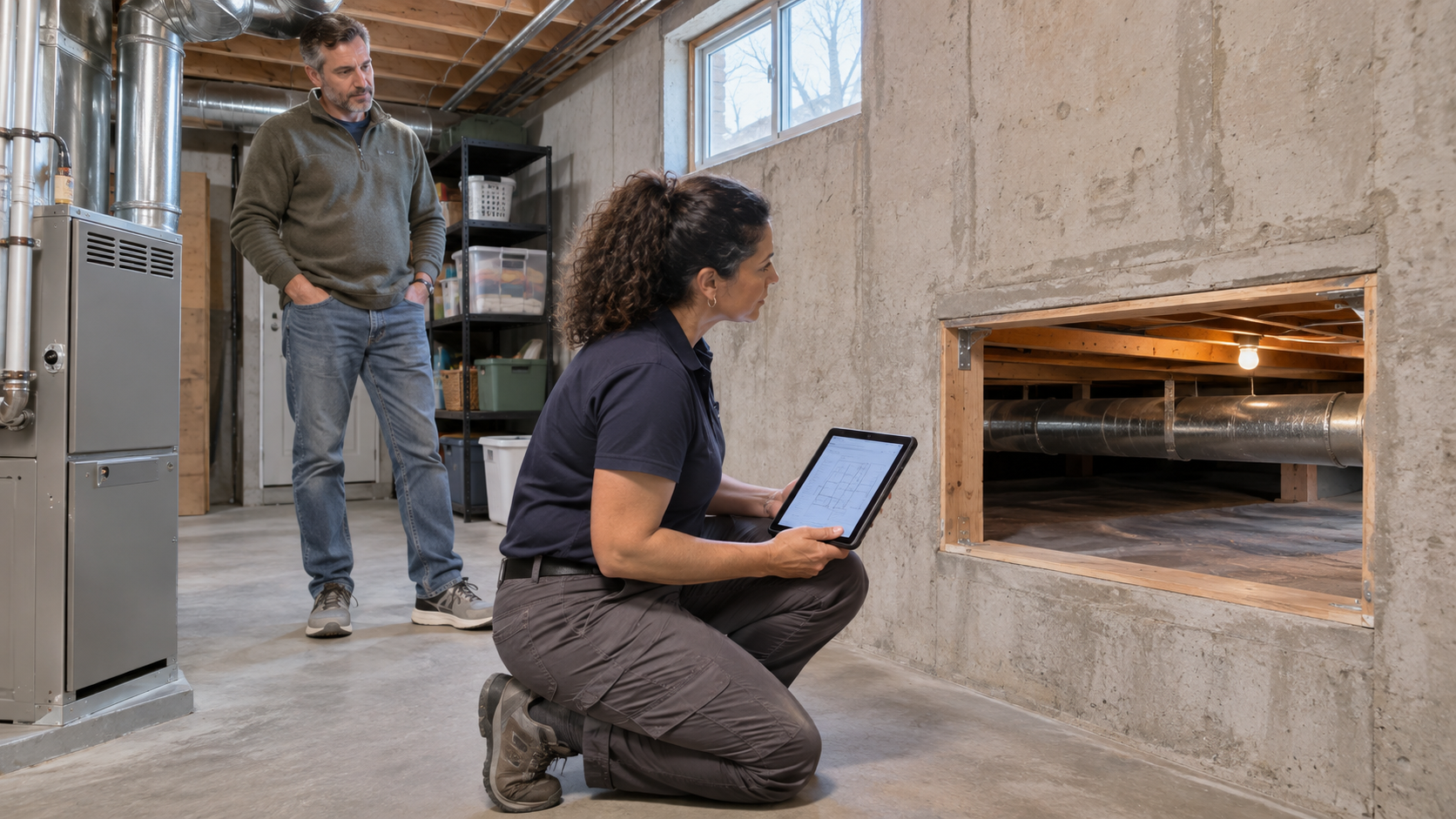
Hard-to-access spaces complicate an otherwise straightforward property problem. Before anyone enters, the project needs an access plan, a defined work area, and an explanation of how materials will be handled on the way out.
A contractor's assessment should distinguish evidence near a furnace from evidence inside the air-distribution system. Those observations are not interchangeable. Ask what was actually inspected and which findings support additional work.
CDC directs owners to professional rodent extermination help when there is evidence rodents have entered heating and cooling ventilation systems, and notes the relevance of specialized duct-cleaning expertise. CDC: Rodents in Air Ducts
Do not take a grille off or enter a crawlspace simply to confirm a suspicion. Tell the assessor about noises, the location of visible evidence, service history, and any prior pest-control findings. Those details can guide an inspection without turning the owner into the investigator.
If testing is proposed, ask what question the test is intended to answer and how the result would change the plan. Denver Decon's article Why Isn't Air Quality Testing Alone Enough After Biohazard Cleanup? discusses why a room-air result should not substitute for understanding affected materials and spaces.
Pest Control and Contamination Cleanup Have Different Jobs
A complete project should assign responsibility for rodent control, entry-point repairs, contamination cleanup, and follow-up. One provider may coordinate several tasks, but the written scope should still identify them separately.
CDC emphasizes controlling and excluding wild rodents as a central prevention strategy. Its exclusion guidance recommends locating and sealing access points and keeping food and garbage secured. CDC: Hantavirus Prevention | CDC: How to Seal Up to Prevent Rodents
For owners comparing proposals, ask who decides when the site is ready for cleanup. Ask who confirms that repairs are complete and who returns if monitoring shows new activity. A statement that someone will “handle the mice” leaves too much room for assumptions.
For example, an illustrative garage project might involve pest control first assessing ongoing activity, a repair contractor addressing entry points, and a cleanup provider managing affected shelving and contents. Another property may require coordinated work in stages. The correct sequence depends on the conditions and the professionals' assessment.
Keep the records together. Pest-control reports, cleanup photographs, repair invoices, and monitoring notes explain different parts of the same project. Together, they provide a more useful history than a single invoice labeled “garage cleaning.”
What If Rodent Activity Is Hidden by Clutter or Other Damage?
A crowded storage room can limit inspection. It may be impossible to define the affected area until belongings are evaluated in a controlled way. That uncertainty should appear in the estimate rather than being ignored.
Ask how additional discoveries will be handled. Will work pause for approval? Who will photograph the findings? Is extra removal billed by an agreed method? A change process established in advance is easier to manage than an unexpected invoice afterward.
Clutter alone does not establish a biological hazard or diagnose a mental health condition. The concern comes from the specific material present and the conditions affecting access and use. Denver Decon's When Does Hoarding Become a Biohazard? Warning Signs and Professional Cleanup Options explains that distinction.
Other property damage may need a separate assessment. A leak, sewage event, and rodent infestation should not be merged into one vague “sanitizing” service. Each finding needs an appropriate scope and an assigned response. If sewage is also involved, Can Mold Grow After a Sewage Backup? Everything Homeowners Need to Know provides relevant background.
Work respectfully with occupants. Agree on priorities and identify belongings requiring special consideration. A clear plan can address property conditions without making judgments about the people who live there.
What Should a Professional Rodent Cleanup Estimate Include?
A useful estimate explains the work well enough that the owner can compare it with another proposal. Room size alone does not describe a contamination project.
Look for an identified work area, the materials to be cleaned or removed, access arrangements, worker protection appropriate to the task, handling of contents, waste management, and the limits of included restoration. Ask how the crew will protect routes used to enter and leave the work area.
The estimate should also describe what is excluded. Examples might include pest extermination, structural repairs, replacement insulation, specialist HVAC work, or assessment of areas that were inaccessible during the initial visit. Exclusions are manageable when they are clear before scheduling.
Ask about experience with projects resembling yours. A small utility closet and a heavily affected attic are different assignments. Verify relevant insurance and any credentials required for the actual work, rather than relying on a generic certification badge.
Denver Decon's article How Do You Know If a Cleanup Company Is Actually Qualified? offers broader contractor-selection questions. Requirements associated with methamphetamine remediation should not automatically be applied to routine rodent cleanup.
Finally, ask who communicates with you during the project. A named point of contact and an agreed approval process help keep decisions clear when new conditions are discovered.
How Much Does Rodent Droppings Cleanup Cost?
The most useful price is a written estimate tied to an observed scope. A generic online number cannot establish the cost of your property without information about access, affected materials, labor, contents, and disposal.
When comparing estimates, check whether they include the same work. One proposal may cover accessible hard surfaces only. Another may include material removal, careful contents handling, and follow-up documentation. A lower total does not necessarily represent a lower price for an equivalent service.
Ask how uncertain areas are priced. A contractor may need a staged assessment or a written allowance for work that cannot be fully defined initially. Request a clear trigger for additional charges and an approval step before extra work proceeds.
Keep pest control, cleanup, repairs, and replacement work distinct in your budget. They may be coordinated, but each should have an identified provider, price, and completion expectation. This makes it easier to understand the total project and avoid discovering an unfinished task after the cleanup crew leaves.
For broader background, see How Much Does Biohazard Cleanup Cost in Denver?
How Should Waste and Cleanup Documentation Be Handled?
Before work begins, ask what will leave the property and how it will be packaged, moved, and accepted for disposal. The contractor should explain the applicable route for the actual materials, quantity, and setting.
Avoid assuming that every bag of rodent-contaminated household debris is legally classified as regulated medical waste. Conversely, do not assume a large removal project can use the same arrangements as a small household cleanup. Confirm local requirements and the receiving facility's acceptance rules where applicable.
Denver Decon's Types of Biohazardous Waste and Disposal Procedures and How to Dispose of Biohazard Waste Safely provide general background. The project-specific disposal decision still needs to reflect what is actually being removed.
Request records describing the observed conditions, the agreed scope, the work performed, material-removal decisions, and any limitations. Photographs can help explain progress, especially when the owner cannot safely inspect the area during work.
If you plan to ask an insurer about the loss, contact the insurer directly about the policy and requested documentation. Do not rely on a contractor's general statement as confirmation of coverage. Denver Decon's What Do Insurance Companies Look for in Biohazard Remediation Documentation? offers questions to raise about project records.
How Should Landlords and Facility Managers Coordinate the Response?
A property manager may need to coordinate an occupant, pest-control provider, cleanup contractor, maintenance team, and building owner. Establish one contact who keeps the scope and schedule together so each provider receives the same information.
Begin with a factual work order. Record the reported location, the discovery date, any photographs taken safely, and whether anyone has already disturbed the material. Avoid labeling the situation with a disease name that has not been established. Describe the evidence and the affected use of the space.
Next, confirm access arrangements with the occupant and follow the requirements applicable to the property. Tell contractors which areas they are authorized to enter, where they can stage supplies, and who approves changes. If neighboring spaces may need inspection, arrange that deliberately rather than assuming permission extends throughout the building.
For an occupied property, ask the project team to explain how the planned work affects everyday access. An occupant needs practical information: which room is unavailable, when the contractor expects to arrive, and whom to contact if circumstances change. Avoid offering a definite completion time before the scope is understood.
For a commercial facility, include the people responsible for stock, equipment, and scheduled deliveries. A storage-room project can create operational questions even when the public areas are unaffected. Decide where incoming goods will be placed and how contractors will access the work area without disrupting unrelated activities.
Finally, document the handoff between providers. If pest control identifies an entry point, assign the repair. If cleanup reveals a material requiring replacement, identify who will authorize and complete that work. Close the overall project only after the owner understands which tasks are finished and which remain open.
These steps do not require complicated paperwork. A concise shared record with dates, responsibilities, and agreed decisions can keep a manageable discovery from becoming a series of disconnected service calls.
How Do You Know the Project Is Ready for Handoff?
Agree on completion expectations before the work begins. The final discussion should compare the completed work with the written scope and identify any remaining tasks.
Ask which areas were inspected, which materials were cleaned or removed, and whether anything remained inaccessible. Confirm any restrictions associated with products used and whether repairs, replacement materials, or pest monitoring are still pending.
A simple “all done” can leave the owner unclear about whether the entire project is complete or only one contractor's portion. Request a short written handoff that names outstanding responsibilities and the person assigned to each one.
For property managers, share the relevant information with the next maintenance provider. If a cabinet needs replacement or an entry point still requires repair, that should remain visible in the work order rather than disappear when the cleanup invoice is closed.
For homeowners, retain the scope, photographs, and follow-up plan together. If new evidence appears later, those records help distinguish a new problem from an area that was never included. Completion should provide a clear account of the work, without an unsupported promise that the property will never have rodents again.
What If Someone Feels Sick After Rodent Exposure?
Contact a healthcare professional if illness develops after exposure, and describe the rodent contact, cleanup activity, location, and approximate date. CDC notes that hantavirus pulmonary syndrome symptoms usually begin one to eight weeks after exposure and can include fever, fatigue, muscle aches, and later respiratory symptoms. Seek urgent care for breathing difficulty; call 911 for severe trouble breathing. CDC: Hantavirus Signs and Symptoms
Do not use the appearance of the room, the absence of an odor, or a cleanup invoice to decide whether symptoms need medical attention. A contractor cannot diagnose infection, and a website article cannot determine an individual's risk.
The property response and the medical response can proceed separately. One addresses the space; the other addresses the person. Give each professional the relevant facts without waiting for the other process to finish.
Frequently Asked Questions About Rodent Droppings Cleanup
1. Can Rodent Droppings Make You Sick?
Yes. Rodent waste can create exposure to infections through contaminated air, food, or contact. Finding droppings does not mean infection occurred, but it warrants careful handling and an assessment of the affected area.
2. Can I Tell Whether Droppings Contain Hantavirus by Looking at Them?
No. Appearance cannot establish whether droppings contain hantavirus. Avoid handling or disturbing them to investigate. Ask a healthcare professional about health concerns and an appropriate property professional about cleanup.
3. Should I Sweep or Vacuum Mouse Droppings?
No. CDC advises against sweeping or vacuuming rodent waste because disturbance can put contaminated particles into the air. Stop routine cleaning and follow current public health guidance.
4. Does Every Rodent Discovery Require Professional Cleanup?
No. Public health guidance includes methods for limited contamination. Extensive waste, uncertain boundaries, difficult access, affected insulation, or evidence in ventilation systems are reasons to seek professional assessment.
5. Does Pest Control Include Contamination Cleanup?
Only if the provider's written scope includes it. Ask separately about rodent control, entry-point repairs, cleanup, material removal, and monitoring so each task has an assigned provider.
6. Will All Affected Belongings Need to Be Discarded?
Not necessarily. Decisions depend on the material, condition, extent of contamination, and available cleaning method. Ask for a material-specific explanation and approve disposal decisions before work begins.
7. How Much Does Rodent Droppings Cleanup Cost in Denver?
The cost depends on the actual scope, including access, affected materials, labor, contents, and disposal. Request a written assessment and confirm whether pest control, repairs, and replacement work are included.
8. Is There a Universal Clearance Test for a Home With Mouse Droppings?
Do not assume one test certifies an entire home. Ask what any proposed test measures, why it is appropriate, and how the result relates to the documented cleanup scope and remaining limitations.
9. What Should I Do if I Already Vacuumed Droppings?
Stop using the vacuum on the affected material. Explain what happened when seeking cleanup advice, and avoid opening or emptying the equipment indoors. Seek medical advice if illness develops after exposure.
10. Who Should I Call About Rodent Contamination in a Denver Property?
Contact a pest-control professional for rodent activity and exclusion, and ask Denver Decon about assessment of contamination cleanup needs. If anyone becomes ill after exposure, contact a healthcare professional.

Take the Next Step Toward a Clear Cleanup Plan
If you have found rodent droppings in a Denver-area home, rental property, storage space, or workplace, start with the location and extent of the evidence. Avoid disturbing the material, keep others out of the affected area, and ask what assessment is needed before cleanup begins.
Denver Decon provides biohazard cleanup and remediation services in the Denver area. Call or text 720-825-2130 to discuss the conditions at your property and request an assessment of the cleanup scope.
A useful first conversation establishes what you found, what work has already occurred, and which professionals may need to coordinate. From there, you can make decisions about cleanup, pest control, affected belongings, and repairs with a clearer understanding of the project.
Colorado Guidelines and Authoritative Safety References
- Colorado Department of Public Health and Environment: Hantavirus Information, Prevention, and Cleanup Resources
- CDPHE: Hantavirus Pulmonary Syndrome and Hantavirus Infection Guidance
- CDC: How to Clean Up After Rodents
- CDC: About Hantavirus
- CDC: Controlling Wild Rodent Infestations
- CDC: How to Seal Up to Prevent Rodents
- National Park Service: Hantavirus Fact Sheet and Light Infestation Cleanup Guidance
- EPA: Safe and Effective