
Not All Cleanup Companies Are Qualified for Biohazard or Meth Remediation
When people search for a cleanup company, they often focus on:
- Price
- Response time
- Availability
- Online reviews
But when biohazard contamination or methamphetamine residue is involved, the most important factor is qualification.
Because here’s the reality:
A company can advertise “cleanup services” without necessarily having:
- Proper hazardous-material training
- Meth remediation certification
- Environmental testing protocols
- Containment procedures
- PPE expertise
- Regulatory compliance knowledge
- Clearance testing experience
And in Colorado, hiring the wrong company can create serious legal, financial, and health consequences.
Especially when dealing with:
- Meth contamination
- Trauma scenes
- Biohazard exposure
- Hoarding contamination
- Infectious waste
- Drug residue contamination
- Hazardous environmental conditions
Why Qualification Matters More Than Price
A low-cost cleanup that fails to properly remediate contamination can become far more expensive later.
Improper remediation may lead to:
- Failed clearance testing
- Recontamination
- Tenant complaints
- Health concerns
- Liability disputes
- Insurance complications
- Occupancy delays
- Real estate disclosure issues
Professional remediation is not janitorial work.
It is regulated environmental hazard management.
Also Read ☣️How Do Buyers Discover Meth Contamination During Home Inspections?
The First Thing to Verify: Certification & Licensing
Colorado Methamphetamine Certification
In Colorado, methamphetamine-affected property cleanup is governed under state regulations.
Depending on the role, certified personnel may include:
- Decontamination Workers
- Decontamination Supervisors
- Consultants
- Ventilation Contractors
These certifications fall under Colorado’s Cleanup of Methamphetamine-Affected Properties regulations (6 CCR 1014-3). (regulations.justia.com)
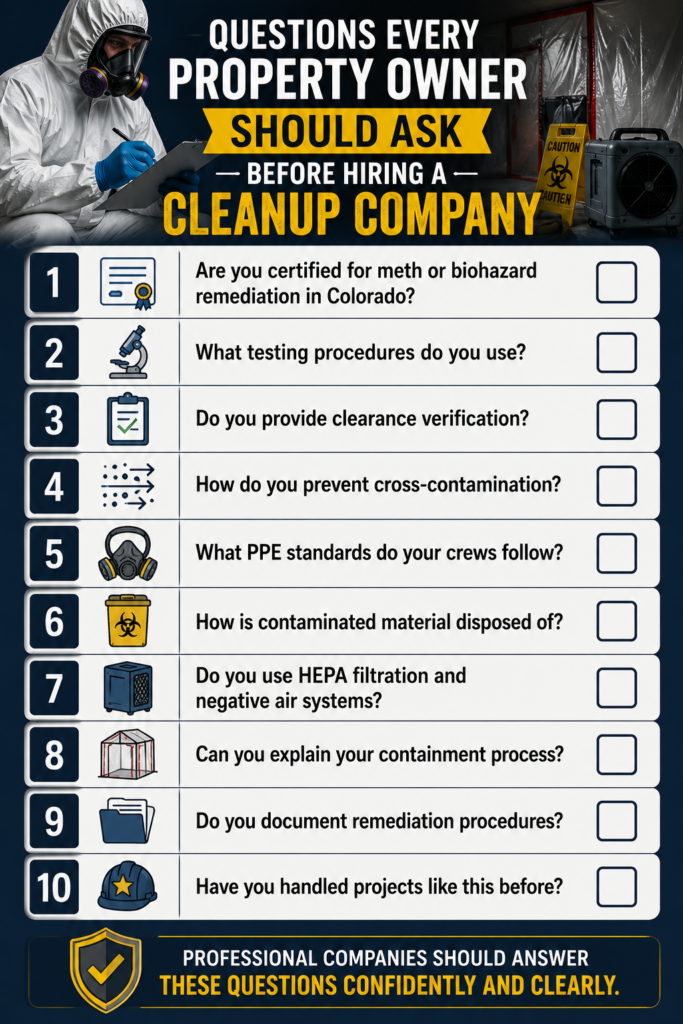
If a company cannot clearly explain:
- Their certifications
- Their remediation qualifications
- Their testing procedures
- Their compliance standards
…that should raise concerns immediately.
Ask About Testing — Not Just Cleaning
One of the biggest red flags is a company that focuses only on “cleaning” but avoids discussing testing.
Professional remediation companies should explain:
- How contamination is identified
- What testing methods are used
- How contamination zones are mapped
- What clearance standards apply
- How post-remediation verification works
Testing often includes:
- Surface wipe sampling
- Laboratory analysis
- HVAC contamination evaluation
- Environmental assessment
- Clearance verification
If a company says:
“You don’t need testing.”
That is often a warning sign.
Because contamination that is not tested cannot truly be verified as removed.
Containment Procedures Matter More Than Most Property Owners Realize
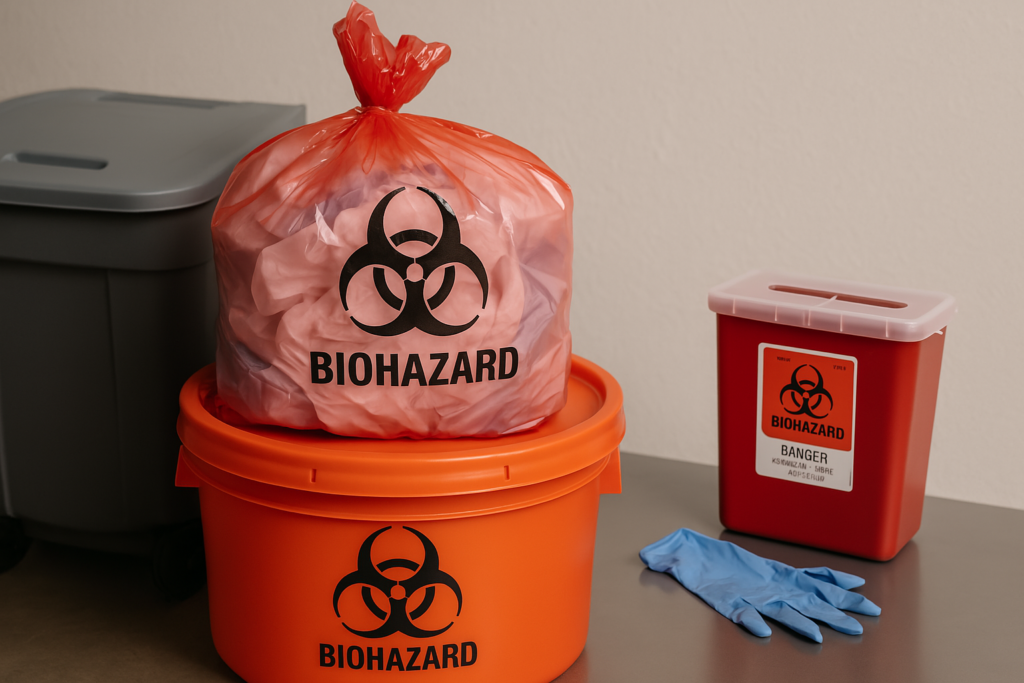
Improper cleanup can actually spread contamination throughout a property.
That’s why qualified remediation companies establish containment systems using:
- Poly barriers
- Negative air pressure
- HEPA filtration
- Controlled work zones
- Decontamination chambers
Colorado meth remediation standards specifically address containment and ventilation procedures because airborne contamination spread is a major risk factor. (law.cornell.edu)
If a company cannot explain its containment strategy clearly, that is a serious concern.
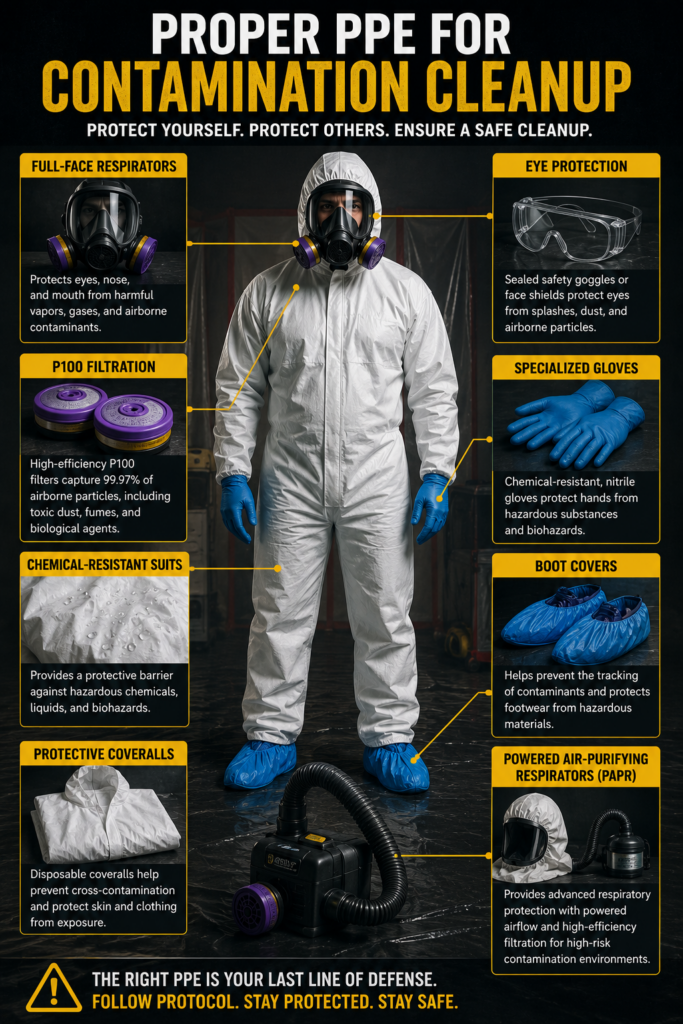
PPE Standards Separate Professionals From Pretenders
Transparency Is One of the Biggest Indicators of Professionalism
Qualified cleanup companies should willingly explain:
- Their process
- Their certifications
- Their safety procedures
- Their documentation practices
- Their testing protocols
- Their disposal methods
Be cautious of companies that:
- Avoid technical questions
- Promise “instant cleanup”
- Downplay contamination risks
- Refuse documentation
- Skip testing discussions
- Offer vague pricing without assessment
Professional remediation companies understand that education and transparency build trust.
Also Read ☣️How Can Hidden Odors Destroy Property Value and Tenant Retention?
Experience Matters — Especially With Complex Contamination
Not every cleanup company has real-world experience handling:
- Methamphetamine contamination
- Trauma scenes
- Bloodborne pathogen risks
- Fentanyl exposure concerns
- Hoarding biohazards
- Hazardous structural contamination
Experienced remediation companies understand:
- Cross-contamination pathways
- HVAC contamination behavior
- Porous material absorption
- Environmental safety procedures
- Regulatory compliance
- Occupancy liability concerns
That experience becomes critical when problems become more complicated than expected.
The Cheap Cleanup That Failed
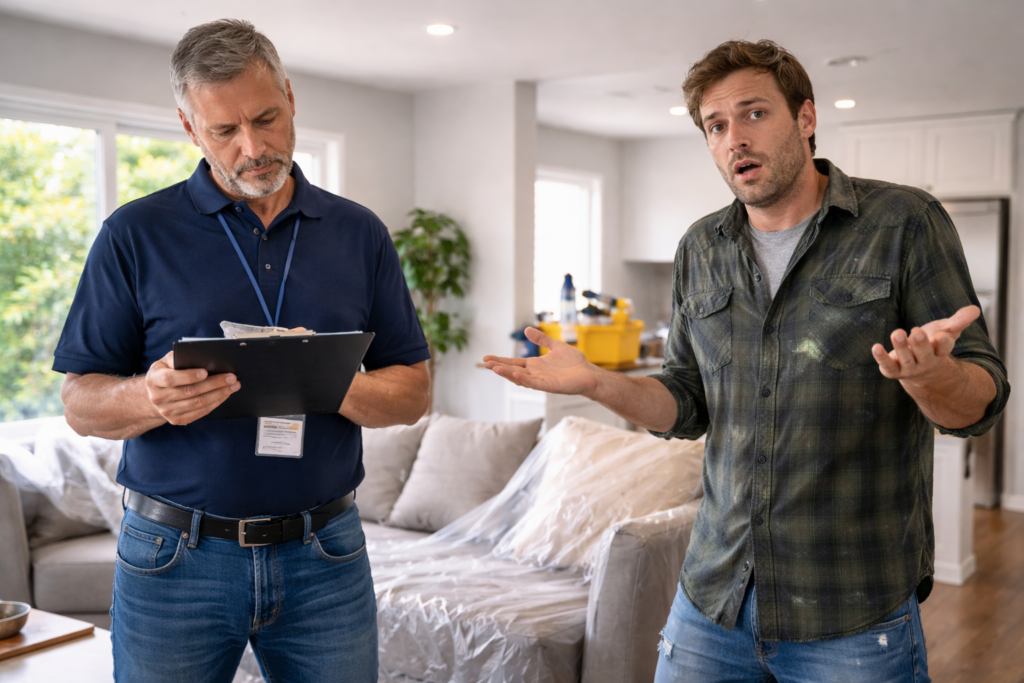
A landlord hires a low-cost “cleanup crew” after suspected methamphetamine activity in a rental unit.
The crew:
- Paints walls
- Removes trash
- Replaces carpet
But they never:
- Conduct testing
- Establish containment
- Address HVAC contamination
- Remove contaminated porous materials
- Perform clearance verification
Months later, new tenants report chemical odors and health complaints.
A professional assessment reveals contamination was never properly remediated.
Now the landlord faces:
- Re-cleanup expenses
- Lost rental income
- Potential legal exposure
- Tenant disputes
- Reputation damage
This scenario happens more often than many property owners realize.
Also Read ☣️How Meth Testing and Clearance Affect Real Estate Transactions in Colorado
Why Documentation Is Becoming More Important

Today’s property owners increasingly need remediation documentation for:
- Insurance claims
- Real estate transactions
- Tenant disputes
- Liability reduction
- Occupancy verification
- Property management compliance
Professional remediation is no longer just about cleanup.
It’s about risk management and long-term property protection.
The Denver Decon Difference

Denver Decon approaches remediation with a focus on:
- Safety
- Compliance
- Transparency
- Professional containment
- Certified procedures
- Environmental responsibility
- Proper testing protocols
Professional remediation requires more than cleaning equipment.
It requires technical expertise, hazardous-material understanding, and structured environmental safety procedures designed to protect both people and property.
What You Should Do Next...
Choosing the right cleanup company can dramatically affect:
- Property safety
- Occupant health
- Liability exposure
- Future property value
- Regulatory compliance
- Long-term remediation success
The right company should offer more than fast service or low pricing.
They should provide:
- Certification
- Testing
- Safety protocols
- Transparency
- Documentation
- Real remediation expertise
Because when hazardous contamination is involved, doing the job correctly matters far more than doing it quickly.
If you need professional biohazard or methamphetamine remediation support in Colorado, Denver Decon can help guide you through the process safely, responsibly, and professionally.
Also Read ☣️Indoor Airborne Contaminants: Hidden Risks in Your Home & How to Eliminate Them
10 FAQs
1. Why does certification matter in biohazard cleanup?
Certification helps ensure technicians understand hazardous-material handling, containment, PPE, testing, and remediation protocols.
2. Does Colorado regulate methamphetamine cleanup?
Yes. Colorado has regulations governing methamphetamine-affected property assessment and remediation.
3. Should a remediation company provide testing?
Yes. Professional testing helps identify contamination levels and verify remediation effectiveness.
4. What is clearance testing?
Clearance testing helps confirm contamination levels meet applicable standards after remediation.
5. Why is containment important during cleanup?
Containment helps prevent dangerous particles or residues from spreading throughout a property.
6. What PPE should remediation crews use?
Depending on contamination severity, crews may use respirators, chemical-resistant suits, gloves, eye protection, and filtration systems.
7. Can improper cleanup spread contamination?
Yes. Poor remediation practices can worsen contamination and create additional exposure risks.
8. What are HEPA filtration systems used for?
HEPA filtration systems help remove hazardous airborne particles during remediation.
9. Is cheap remediation risky?
Low-cost remediation that skips testing or containment may lead to failed cleanup and long-term liability.
10. Does Denver Decon provide certified remediation services?
Denver Decon provides professional remediation services designed around safety, compliance, and proper environmental protocols.