

What is the Unspoken Problem Costing Property Owners Millions?
Answer: Hidden, unresolved odor contamination that quietly drives vacancies, lowers rents, increases tenant turnover, and damages long-term property value without ever appearing on a balance sheet.
Odor is the most underestimated threat in property management. It doesn’t show up on inspection reports the way mold or structural damage does, yet it exerts a powerful influence over human behavior, leasing decisions, and perceived value.
Tenants rarely say, “The building smells bad.”
They say, “It just didn’t feel right.”
Then they walk.
In 2026’s rental market — shaped by tighter margins, higher expectations, and online reviews that never forget — odor is no longer a nuisance issue. It’s a business liability.
Why Does Odor Have Outsized Economic Impact?
Answer: Smell directly influences human emotion and decision-making, causing tenants to reject properties, demand concessions, or move out—often instantly and without explanation.
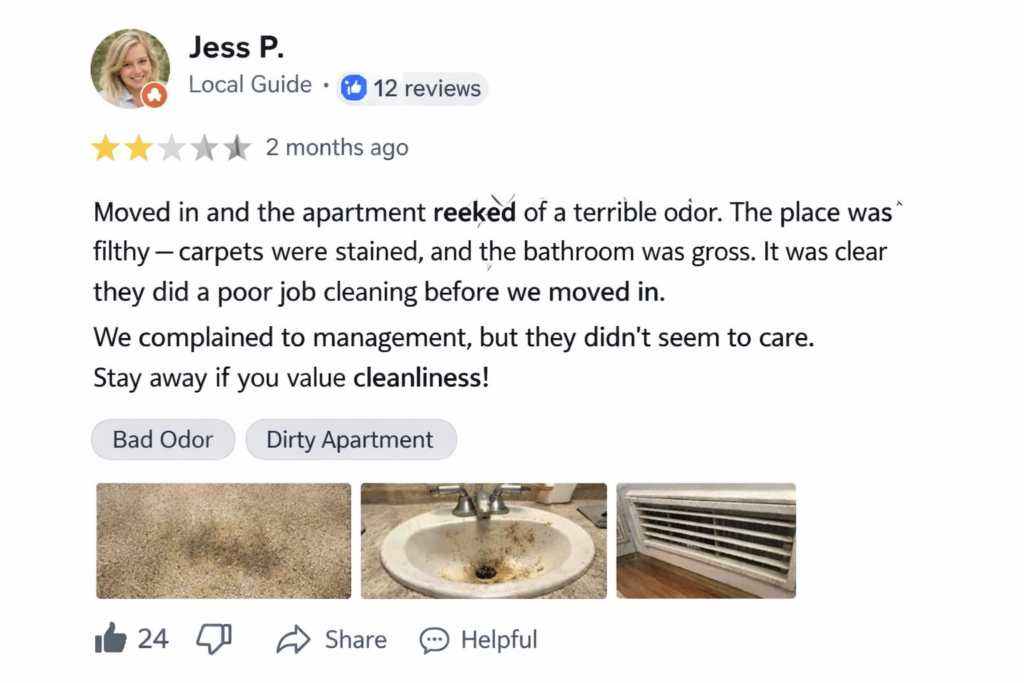
Smell bypasses rational thought and goes straight to the brain’s limbic system — the region responsible for emotion and memory. That means odors instantly trigger judgments about cleanliness, safety, and quality, often before a prospective tenant consciously notices anything is wrong.
For landlords, this translates into measurable losses:
• Longer vacancy times
• Reduced rental rates
• Higher tenant churn
• Increased complaints and legal exposure
• Poor online reviews that permanently suppress demand
Once an odor becomes associated with a property, the stigma lingers — even after cosmetic fixes.
Also Read 👉🏼Hidden Mold in Colorado Homes: Why “Clean” Doesn’t Always Mean Safe
What Is The Invisible Depreciation Curve of Odor and Property Value?
Answer: This occurs when persistent odors silently reduce perceived quality, forcing lower rents, longer vacancies, and repeated turnover that steadily erodes a property’s market value over time.
Appraisers don’t always list “odor” on valuation sheets, but investors and tenants absolutely price it in.
Properties with persistent odor issues often experience:
- Rent concessions during lease-up
- Reduced renewal rates
- Higher unit turnover costs
- Deferred maintenance compounding hidden damage
Odors from smoke, pet contamination, biohazards, sewage, or long-term moisture intrusion signal neglect — whether or not that’s fair. In competitive markets like Denver, perception is value.
Why Is Smell a Dealbreaker With Tenant Retention?
Answer: Tenants interpret persistent odors as neglect or health risk, prompting complaints, dissatisfaction, and non-renewal even when the unit is otherwise well maintained.

When odors persist:
- Tenants file more maintenance requests
- Complaints escalate to property management companies
- Lease renewals drop
- Residents quietly plan their exit
Even mild odors that management becomes “nose-blind” to remain glaringly obvious to residents who live with them daily.
The result? A slow bleed of reliable tenants replaced by higher-risk occupants and rising turnover costs.
What Are The Real Sources of “Mystery Smells”?
Answer: “ Mystery smells” originate from odor-causing compounds embedded deep in materials like drywall, subfloors, HVAC systems, and structural voids due to smoke, pet contamination, moisture, biohazards, or sewage rather than surface-level dirt.
Most chronic odor issues are not surface-level problems. They originate deep within materials:
• Smoke embedded in drywall and framing
• Pet urine crystallized in subfloors
• Bacteria in HVAC systems
• Decomposition residues after unattended deaths
• Sewage gases trapped in structural voids
• Moisture-fed microbial colonies behind walls
Air fresheners, ozone gimmicks, and repainting do not solve these problems. They temporarily mask symptoms while damage — and odor — continues.
Also Read 👉🏼Beyond Smoke: How Cannabis Odor Impacts Indoor Air Quality (And What You Can Do About It)
What Are The Legal and Liability Risks Landlords Can’t Ignore?
Answer: Landlords face legal and liability risks when persistent odors are interpreted as habitability violations, health hazards, or negligence, potentially leading to tenant claims, regulatory action, fines, or lawsuits.
Odor complaints increasingly intersect with habitability laws, fair housing claims, and health regulations.

Persistent smells may be interpreted as:
- Evidence of mold or biohazard exposure
- Failure to maintain safe living conditions
- Negligence after prior tenant reports
In worst-case scenarios, odor complaints escalate into inspections, citations, or lawsuits — particularly when vulnerable populations are involved.
Why Do DIY and Janitorial Fixes Fail?
Answer: They only mask surface odors while leaving odor-causing compounds embedded in building materials, allowing smells to return and damage tenant trust and property value.
Standard cleaning protocols are designed for visible dirt, not molecular odor contamination.
Mopping, repainting, or replacing carpet without addressing underlying sources often locks odors deeper into materials. In some cases, heat and humidity re-activate dormant odor compounds months later — right after a new tenant moves in.
This cycle damages trust and invites repeat costs.
Is Professional Odor Remediation Really A Financial Safeguard?
Answer: Yes - it eliminates odors at the source, shortens vacancy time, protects rent rates, reduces tenant turnover, and prevents repeat remediation costs or legal exposure.
True odor remediation treats smell as a contamination problem, not a cleaning task.
Professional remediation:
- Identifies odor sources using forensic inspection
- Removes or neutralizes odor-causing compounds at the molecular level
- Treats porous materials, HVAC systems, and structural cavities
- Verifies results before re-occupancy
For property owners, this means faster leasing, stronger renewals, and preserved asset value.
Also Read 👉🏼How To Select The Right Biohazard Cleanup Service?
Why Denver Decon Is Different
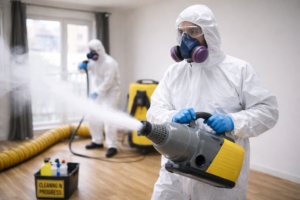
Denver Decon specializes in forensic-grade odor remediation, biohazard cleanup, and contamination control for residential, commercial, and multi-unit properties throughout the Denver metro area.
Their work goes beyond masking smells. They eliminate the source — whether from smoke damage, unattended deaths, hoarding situations, sewage events, or long-term neglect — restoring properties to truly rentable condition.
For landlords and property managers, this translates into:
- Faster unit turnover
- Fewer complaints
- Reduced legal risk
- Stronger property reputation
Odor Management in 2026 and Beyond
Looking ahead, odor control is becoming a baseline expectation, not a premium feature.
Emerging trends shaping the industry:
- Increased tenant awareness of indoor air quality
- Stricter habitability enforcement
- ESG-driven property valuation metrics
- AI-driven review aggregation amplifying negative experiences
In this environment, ignoring odor issues is not cost-saving. It’s value-destructive.
The Bottom Line for Property Owners

Odor silently erodes everything landlords work to build: value, reputation, and tenant stability.
Addressing it professionally:
- Protects revenue
- Preserves asset value
- Strengthens tenant relationships
- Prevents compounding costs
Denver Decon helps property owners eliminate odor at the source — permanently — so buildings remain profitable, compliant, and desirable.
FAQ

1. Can odors really affect property value?
Yes. Persistent odors reduce perceived quality, increase vacancy time, and often force rent concessions.
2. Are odors considered a habitability issue?
In many jurisdictions, ongoing odors may trigger habitability or health concerns.
3. Why does repainting not fix odor problems?
Paint seals odors temporarily but does not remove odor-causing compounds inside materials.
4. What odors are hardest to remove?
Smoke, pet urine, decomposition, and sewage odors embedded in porous materials.
5. How long does professional odor remediation take?
Depending on severity, remediation can take hours to several days.
6. Can odor return after treatment?
Only if the source is not fully removed — professional remediation prevents recurrence.
7. Is odor remediation cheaper than replacing materials?
Often yes, especially when structural materials can be salvaged.
8. Do tenants notice odors property managers miss?
Absolutely. Nose-blindness is common among long-term staff.
9. Can odors affect online reviews?
Yes. Odor complaints are a common trigger for negative reviews.
10. When should landlords call Denver Decon?
At the first sign of persistent or unexplained odor — before it becomes a vacancy problem.