

Why Does My House Smell More Like My Dog During Summer?
Many Colorado homeowners notice something interesting when temperatures begin climbing.
The family dog hasn't changed.
The home is being cleaned regularly.
Nothing seems different.
Yet suddenly the entire house smells stronger.
Dog odors become more noticeable.
Pet beds seem smellier.
Carpets hold onto odors.
Previously manageable pet smells suddenly feel overwhelming.
The reason isn't necessarily that your pet is creating more odor.
Instead, summer heat often amplifies odor sources that have already been present all along.
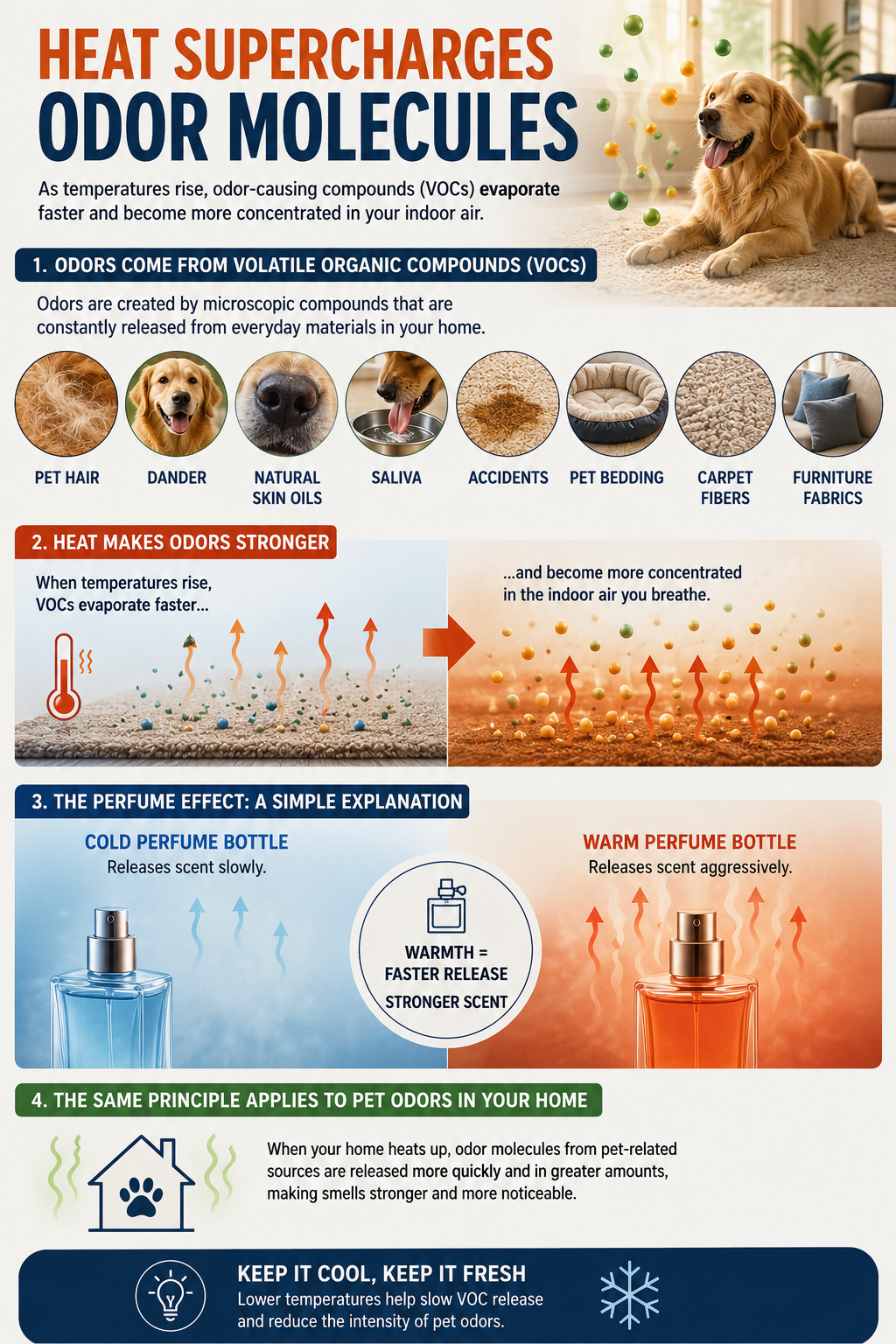
As temperatures rise, odor molecules become more active and are released into the air more rapidly. This allows your nose to detect smells that may have been trapped or less noticeable during cooler months.
Colorado's Climate Creates Unique Odor Challenges
Many people assume humidity is required for odors to become worse.
Colorado proves that's not always true.
The Front Range experiences intense sunshine, elevated UV exposure, and significant temperature swings throughout the summer.
Homes often remain closed during the hottest part of the day while air conditioning systems continuously recirculate indoor air.
This creates conditions where odor compounds can build up and circulate repeatedly throughout the home.
Pet odors that were previously isolated in one room may gradually spread into multiple living areas.
Also Read ☀️Seasonal Mold & Odor Risks in Colorado: What Should You Watch for in Winter vs. Summer?The Hidden Problem: Pet Urine Beneath the Surface
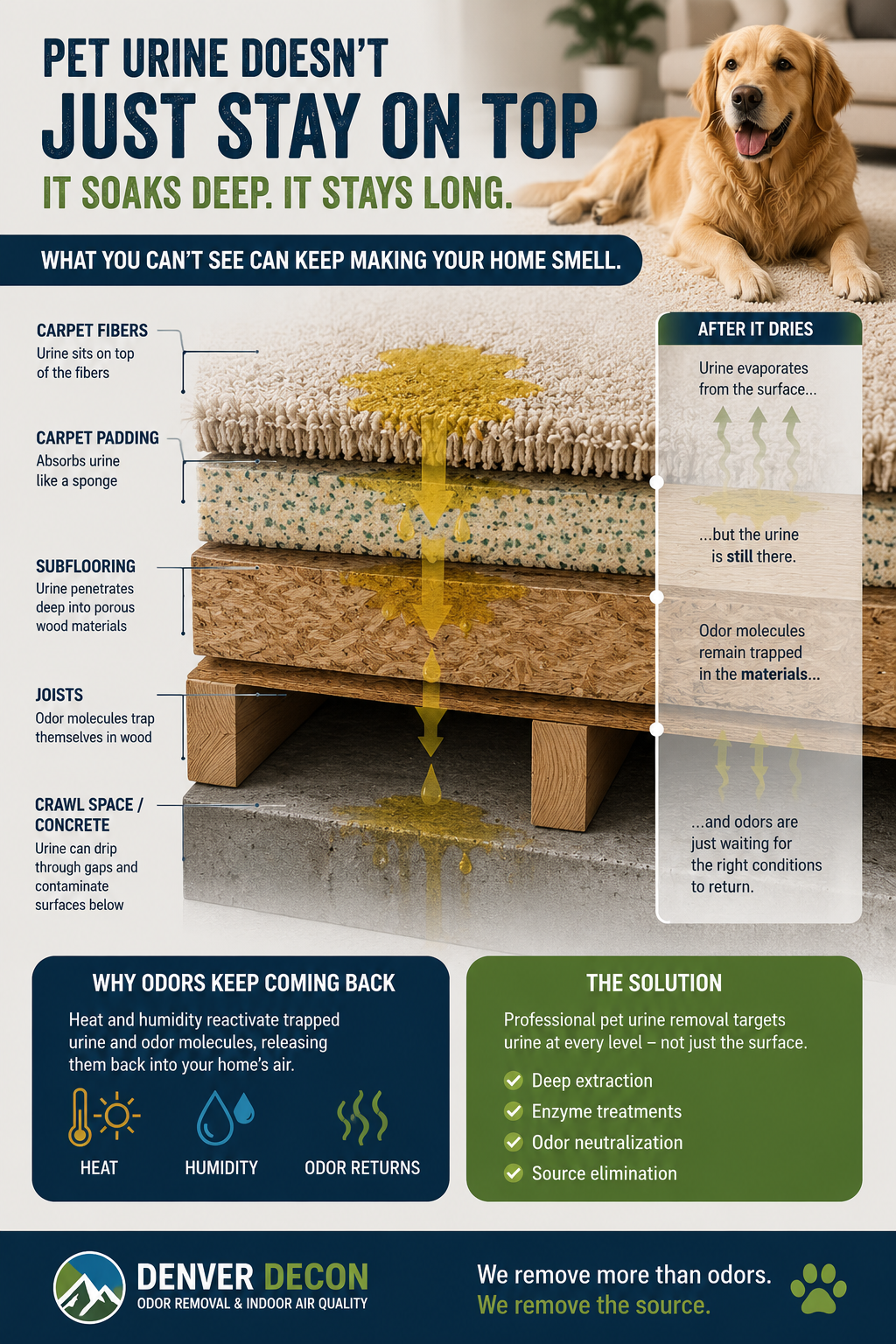
One of the biggest misconceptions homeowners have is believing pet odor exists only on the surface.
Unfortunately, the strongest odors are often hidden where they cannot be seen.
Pet urine frequently penetrates:
- Carpet fibers
- Carpet padding
- Hardwood flooring gaps
- Subfloor materials
- Baseboards
- Concrete surfaces
When temperatures rise, these contaminated materials release stronger concentrations of odor compounds.
This explains why a home may smell fine during winter but develop a noticeable pet odor problem during summer.
The contamination never disappeared.
The heat simply made it easier to detect.
☀️Pet & Urine Odor RemovalColorado Homeowner Scenario
A homeowner in Highlands Ranch contacted Denver Decon after noticing a persistent pet odor that seemed to worsen every summer.
The home had been professionally cleaned multiple times.
Carpets had been shampooed.
Pet bedding was washed regularly.
Air fresheners were used throughout the home.
Despite these efforts, the smell continued returning.
Inspection revealed historical urine contamination beneath several carpeted areas where a previous pet had repeatedly marked.
The contamination had soaked into the padding and portions of the subfloor.
Surface cleaning temporarily improved the smell but never addressed the source.
Once source removal and professional odor remediation were completed, the recurring odor problem was eliminated.
☀️ServicesWhy Carpet Cleaning Often Doesn't Solve Pet Odors
Carpet cleaning can improve appearance.
It can remove dirt.
It can reduce surface contamination.
But it often cannot eliminate deeply embedded odor sources.
This is why many homeowners become frustrated.
The carpet looks clean.
Yet the smell returns.
In many cases, the contamination exists below the cleaned surface.
Unless the source is addressed, odor molecules continue to be released into the indoor environment.
Also Read ☀️How To Remove Pet Odor From Car Carpet?Your HVAC System May Be Spreading Pet Odors
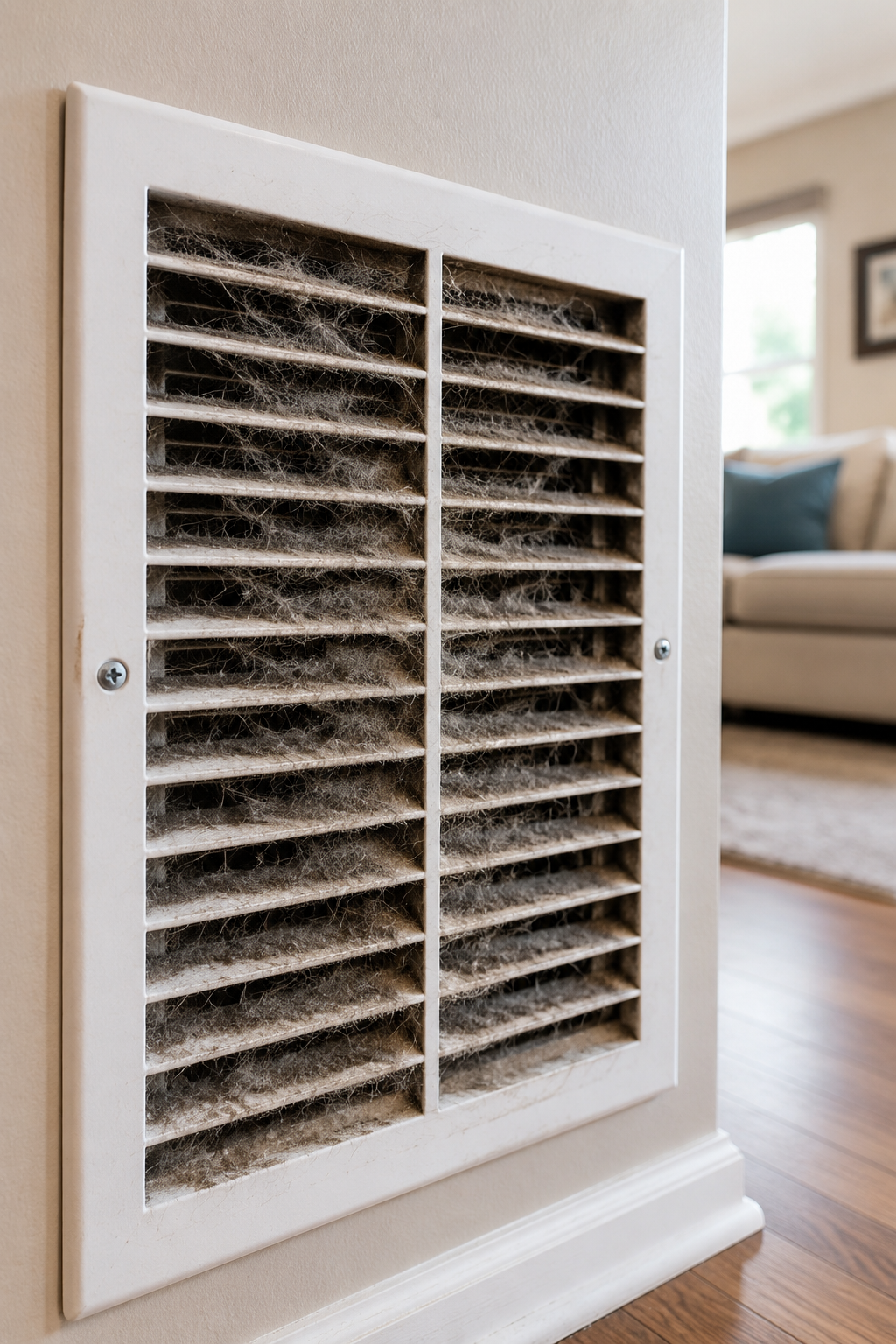
Many homeowners never consider their HVAC system as part of an odor problem.
However, air conditioning systems continuously move air throughout the home.
Pet hair.
Dander.
Odor particles.
Dust.
These materials can accumulate within:
- Return vents
- Ductwork
- Filters
- Air handling equipment
As air circulates, odor compounds may be redistributed throughout multiple rooms.
What began as a localized pet odor issue can eventually affect the entire house.
Also Read ☀️Does Your HVAC System Spread Contaminants After a Biohazard Event?When Pet Odors Become a Real Estate Problem
Pet odors don't just affect comfort.
They can impact property value.
Prospective buyers often notice odors immediately upon entering a home.
Even if homeowners have become nose-blind to the smell, visitors frequently detect it within seconds.
Strong pet odors can:
- Reduce buyer confidence
- Increase time on market
- Trigger lower offers
- Create concerns about hidden damage
For homeowners preparing to sell, professional odor remediation is often one of the most effective investments they can make.
Also Read ☀️How Can Hidden Odors Destroy Property Value and Tenant Retention?Why Air Fresheners Rarely Work
Air fresheners are designed to mask odors.
They do not eliminate odor sources.
The result is often a combination of:
- Pet odor
- Artificial fragrance
- Increased homeowner frustration
True odor removal requires identifying and treating the contamination source.
Until that happens, odors frequently return.
Also Read ☀️How to Improve Indoor Air Quality?Future-Proofing Your Home Against Pet Odors
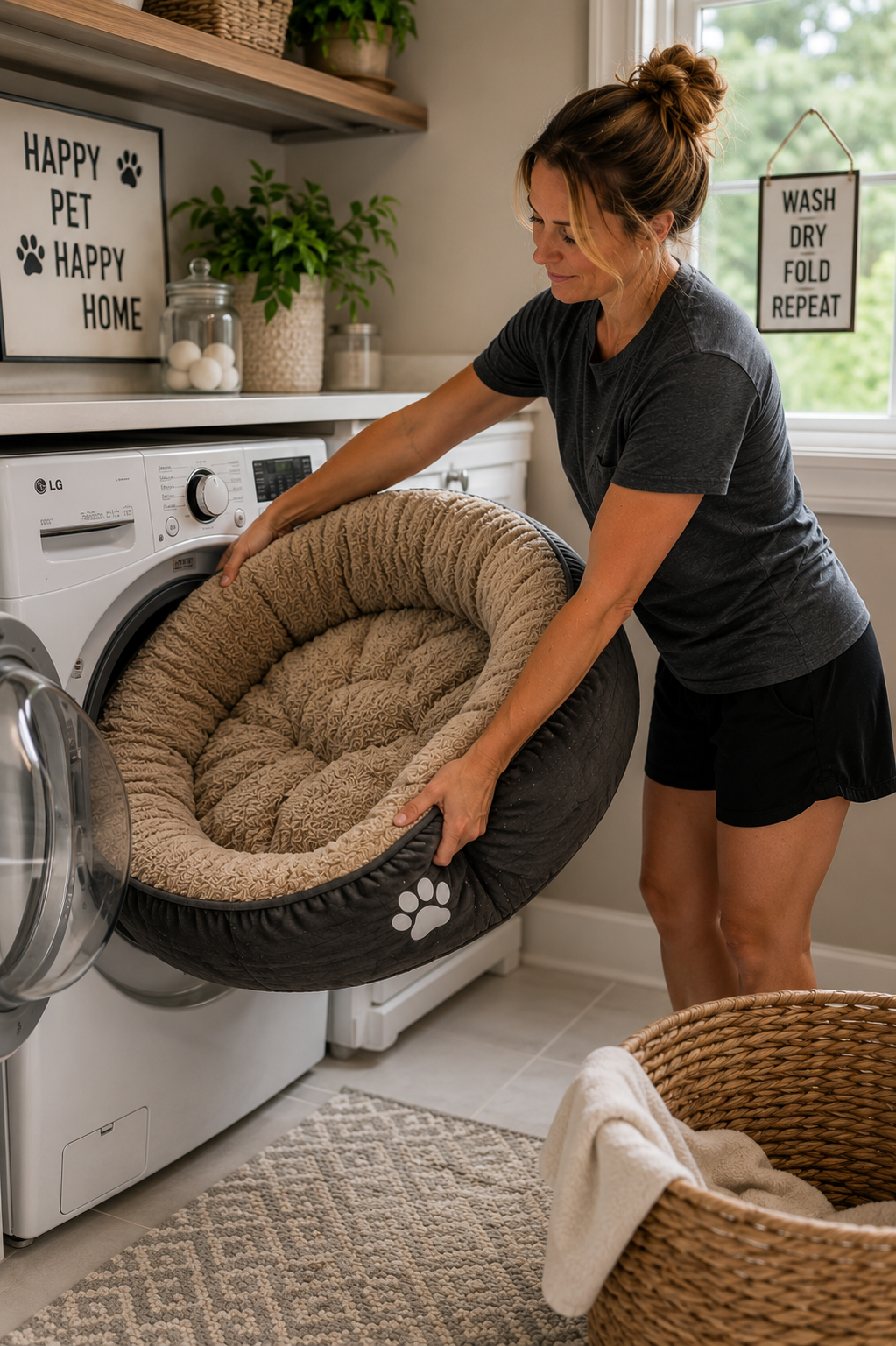
Pet ownership and odor control can absolutely coexist.
The most effective prevention strategies include:
- Immediate cleanup of accidents
- Regular washing of pet bedding
- Frequent filter replacement
- HVAC maintenance
- Professional odor inspections when necessary
- Source-focused remediation rather than masking
These steps help reduce the likelihood of persistent odor issues developing over time.
Also Read☀️Is Chlorine Dioxide Safe For Odor Removal?Conclusion
Summer heat has a way of revealing odor problems that may have been quietly hiding inside a home for years.
If your house suddenly smells more like your dog, cat, or previous pet during Colorado's hottest months, the issue may not be your pet at all.
It may be hidden contamination beneath carpets, inside flooring materials, or circulating through your HVAC system.
The good news is that professional odor remediation can identify and eliminate the source of the problem rather than simply covering it up.
Give Us A Call
If pet odors seem stronger every summer, Denver Decon can help.
Our professional odor remediation services target the source of the odor—not just the symptoms—helping Colorado homeowners restore a fresher, cleaner indoor environment.
Contact Denver Decon today to schedule a professional pet odor assessment. 📞Contact & Service Area 🏡Home
🏡Home
Frequently Asked Questions
Why do pet odors seem stronger during summer?
Summer heat increases the release of odor molecules from pet hair, dander, skin oils, saliva, and urine contamination. As temperatures rise, odors become more noticeable throughout the home.
Can pet urine odors get worse in hot weather?
Yes. Heat can reactivate pet urine contamination trapped in carpet padding, subfloors, hardwood flooring, and concrete, making odors significantly stronger during summer months.
Why does my house smell like dog even after cleaning?
Surface cleaning often removes dirt and visible debris but may not eliminate odor sources hidden beneath carpets, furniture, flooring materials, or inside HVAC systems.
Can air conditioning spread pet odors throughout a house?
Yes. HVAC systems continuously circulate air. Pet hair, dander, and odor particles can accumulate in filters, ductwork, and vents, allowing odors to spread throughout multiple rooms.
Does carpet cleaning permanently remove pet odors?
Not always. If contamination has penetrated carpet padding or subfloor materials, standard carpet cleaning may only provide temporary improvement without eliminating the source.
How do professionals remove pet odors?
Professional odor remediation focuses on identifying and treating the source of contamination using specialized equipment, odor-neutralizing technologies, and remediation techniques rather than simply masking smells.
Can pet odors affect home value?
Yes. Strong pet odors can negatively impact buyer perception, reduce marketability, and sometimes lead to lower offers when selling a home.
Are air fresheners effective for pet odor removal?
Air fresheners typically mask odors rather than remove them. The underlying contamination remains present and odors often return once the fragrance dissipates.
What areas of a home commonly trap pet odors?
Common odor reservoirs include carpets, carpet padding, subfloors, pet bedding, furniture, area rugs, baseboards, HVAC systems, and porous flooring materials.
When should I call a professional odor removal company?
If odors continue returning after cleaning, worsen during summer, or seem concentrated in certain areas of the home, professional odor remediation may be necessary to identify and eliminate the source.