

Does Your HVAC System Spread Contaminants After a Biohazard Event?
Yes—HVAC systems can spread contaminants after a biohazard event. Air ducts, coils, and ventilation pathways can harbor mold spores, smoke residue, biological particles, and persistent odors, re-circulating them throughout a building unless professionally cleaned and remediated.
The Invisible Highway Above Your Ceiling
When a biohazard event occurs—whether it’s mold contamination, sewage backup, fire damage, decomposition, or infectious material—the obvious damage gets attention first. Floors are cleaned. Surfaces are disinfected. Odors are masked.
Meanwhile, above the ceiling tiles and behind the walls, your HVAC system quietly becomes a distribution network for contamination.
Air doesn’t respect room boundaries. It moves, circulates, and redistributes whatever it picks up along the way. If contaminants enter your ventilation system, they don’t stay put. They travel.
That’s why post-biohazard HVAC cleaning isn’t optional—it’s foundational to true remediation.
How HVAC Systems Become Contaminated After Biohazard Events
HVAC systems are designed to move air efficiently, not to filter out complex biological or chemical hazards. During a biohazard event, several pathways allow contamination to enter the system:
- Airborne biological particles drawn into return vents
- Smoke particulates pulled through ductwork during or after fires
- Moisture intrusion creating ideal conditions for mold colonization
- Odors absorbed into porous duct liners and insulation
- Cross-contamination between rooms via shared air handling units
Once inside, contaminants adhere to duct surfaces, coils, drain pans, and filters—areas rarely addressed during standard cleaning.
Also Read ☣️Hidden Mold in Colorado Homes: Why “Clean” Doesn’t Always Mean Safe
Mold in Ductwork: A Self-Sustaining Problem
Mold spores are microscopic, persistent, and opportunistic. HVAC systems provide everything mold needs:
- Darkness
- Stable temperatures
- Condensation and humidity
- Organic dust as a food source
Once mold establishes itself inside ductwork or air handlers, every heating or cooling cycle can release spores back into occupied spaces. This can cause:
- Chronic respiratory irritation
- Exacerbation of asthma and allergies
- Musty, persistent odors
- Failed post-remediation air quality tests
Surface cleaning alone does not stop this cycle.
Smoke Residue: Why Odors Keep Coming Back
After fire or smoke damage, many property owners are baffled when odors return weeks later. The culprit is often the HVAC system.
Smoke particles are ultrafine and electrostatically charged. They bind aggressively to:
- Metal duct interiors
- Fiberglass duct liners
- HVAC coils and blower assemblies
Each time the system activates, residual smoke compounds volatilize and re-enter the air. Without professional HVAC cleaning and deodorization, the building never fully recovers.
Also Read ☣️How Can Hidden Odors Destroy Property Value and Tenant Retention?
Biological Hazards and Cross-Contamination Risks
In trauma scenes, sewage backups, or infectious contamination events, HVAC systems can facilitate exposure beyond the original site.
Air movement can spread:
- Bacteria and viruses
- Decomposition byproducts
- Aerosolized biological matter
This is especially dangerous in:
- Healthcare facilities
- Multi-tenant buildings
- Schools and daycare centers
- Hospitality environments
Failing to clean the HVAC system after such events may undermine the entire remediation effort and create liability exposure.
Why Standard HVAC Maintenance Is Not Enough
Routine HVAC maintenance focuses on efficiency, not contamination control. Standard services typically include:
- Filter replacement
- Visual inspections
- Mechanical servicing
They do not address:
- Internal duct contamination
- Biofilm formation on coils
- Embedded odors in insulation
- Post-event biological residues
Biohazard HVAC remediation requires specialized protocols, equipment, and chemical treatments designed for decontamination—not comfort cooling.
What Professional Post-Biohazard HVAC Cleaning Involves
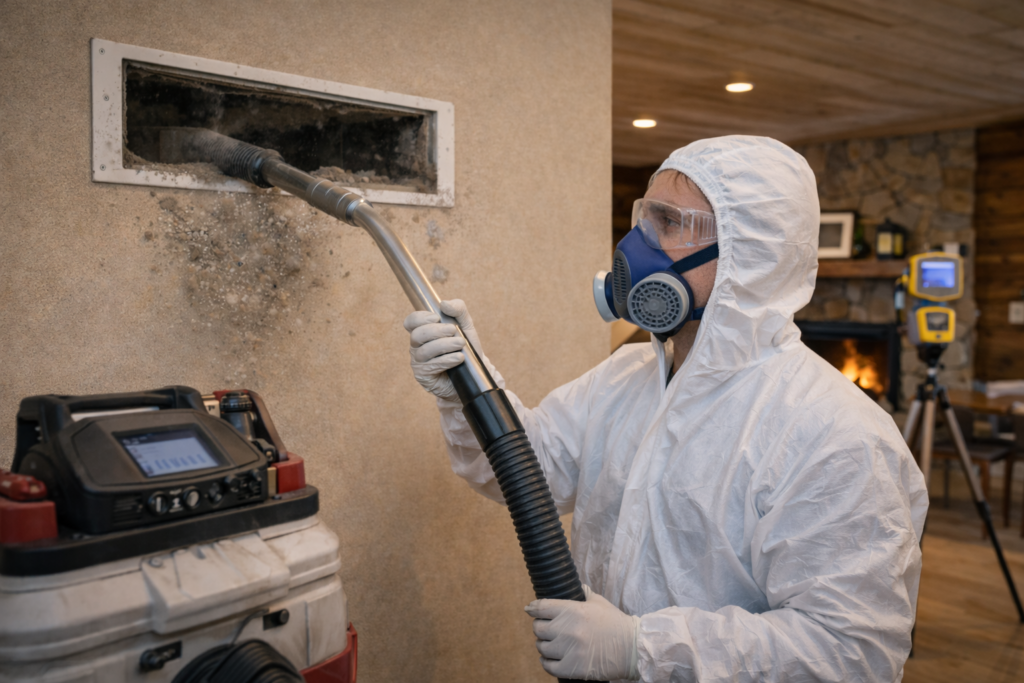
A qualified remediation provider will approach HVAC cleaning as part of a larger environmental control strategy, including:
- Negative air containment during cleaning
- HEPA-filtered vacuum extraction of ducts
- Coil and blower decontamination
- Antimicrobial or oxidizing treatments where appropriate
- Odor neutralization (not masking)
- Post-cleaning air quality verification
This process ensures contaminants are removed—not redistributed.
Regulatory, Health, and Liability Considerations
Failing to address HVAC contamination after a biohazard event may conflict with:
- OSHA indoor air quality expectations
- EPA guidance on mold and air contaminants
- Local health department standards
- Insurance remediation requirements
From a risk management standpoint, untreated HVAC systems can compromise documentation, insurance claims, and long-term occupant safety.
The Bottom Line: Clean the Air, Not Just the Room
A space cannot be considered clean if the air system feeding it is contaminated. HVAC systems don’t forget biohazard events—they preserve them.
Professional HVAC cleaning after biohazard incidents isn’t an upsell. It’s the final step that determines whether remediation actually worked.
Clean surfaces without clean air is just a pause button on contamination.
Also Read☣️What are the Top Contaminates in My Home & How to Get Rid of Them
FAQs
1. Can HVAC systems really spread mold after remediation?
Yes. Mold spores in ductwork can be redistributed every time the system runs.
2. How long can smoke residue remain in HVAC ducts?
Smoke particles can persist for months or years without professional cleaning.
3. Is HVAC cleaning required after a sewage backup?
If contaminants entered the air system, cleaning is strongly recommended for health and safety.
4. Will changing filters remove biohazard contaminants?
No. Filters do not clean ducts, coils, or internal components.
5. Can odors come from HVAC systems even after cleaning rooms?
Yes. Odors often originate from contaminated duct materials.
6. Is HVAC contamination visible?
Often no. Many hazards are microscopic or absorbed into materials.
7. Are there health risks from contaminated ductwork?
Yes. Respiratory issues, headaches, and irritation are common symptoms.
8. Do insurance policies cover HVAC biohazard cleaning?
Coverage varies, but documentation of contamination improves claim success.
9. How soon should HVAC systems be cleaned after a biohazard event?
As soon as possible, before system reactivation.
10. Does HVAC cleaning improve air quality testing results?
Yes. It often determines whether a space passes post-remediation clearance.